Beyond Fair Trade: Why Living Wages and Price Transparency Matter in Specialty Coffee
Discover why industry leaders are moving beyond traditional fair trade coffee models. We explore how living wages and price transparency ensure a sustainable future for specialty coffee farmers.
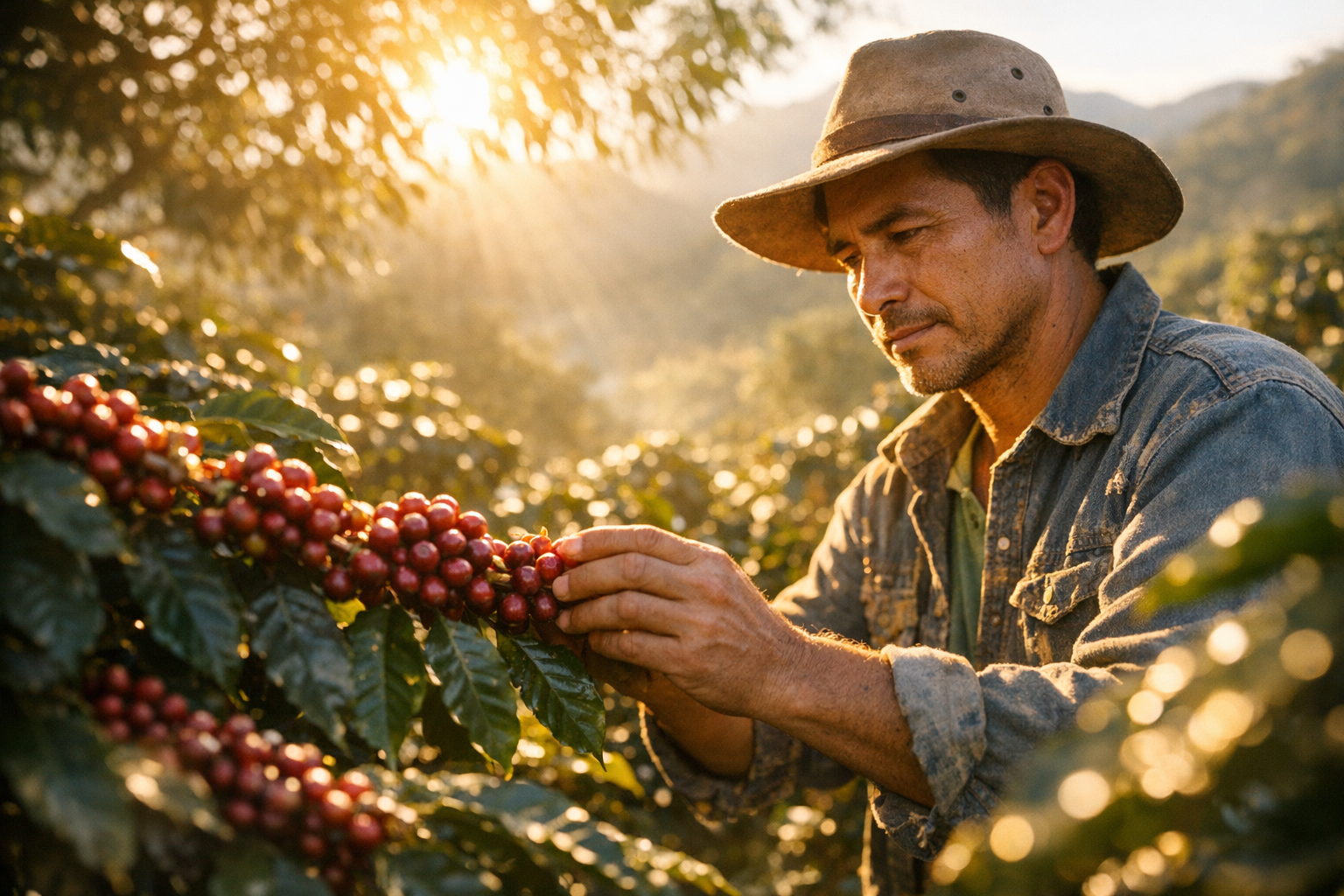
Conscious consumers in 2026 increasingly expect their premium coffee purchases to support farming communities, but retail price tags rarely tell the full story. While paying $20 to $30 for a bag of premium or organic coffee implies high compensation for the farmer, empirical evidence demonstrates a significant gap between retail value and actual farmgate earnings.
To bridge this gap, ethical leaders within the coffee industry are shifting away from traditional minimum pricing models toward radical transparency, verified living wages, and structural supply chain changes.
What is a Living Income Reference Price (LIRP)?
A Living Income Reference Price (LIRP) calculates the exact price per pound a producer must receive at the farmgate to achieve a sustainable baseline standard of living. This localized benchmark accounts for average farm size, sustainable yields, and regional living costs—including nutritious food, housing, healthcare, education, and climate adaptation.
The LIRP fundamentally differs from traditional floor prices by adjusting dynamically to actual producer needs rather than relying on generalized commodity market metrics. For example, recent pilot models in Colombia established a Verified Living Income (VLI) benchmark of $2.24 per pound (FOB) to secure economic stability for farmers, as detailed by Heifer International and Bellwether Coffee.
Why Fair Trade Coffee Minimums Are a Safety Net, Not a Living Wage
Standard Fair Trade minimums establish a crucial floor price to protect smallholder farmers when commodity markets crash, but they frequently fall short of securing a true living income. For decades, global green coffee trade has been anchored to the New York C-market futures contract, exposing farmers to extreme volatility driven by financial speculation and weather shocks.
To combat rising inflation and production costs, Fairtrade International updated its minimum pricing in December 2026, raising the washed Arabica minimum to $2.00 per pound, alongside a $0.40 organic differential. While this historic price increase offers vital protection against market troughs, research from the Columbia Center on Sustainable Investment shows that floor prices do not consistently close the living income gap. When C-market prices sit above the minimum floor, standard mechanisms simply default to prevailing market prices plus premiums, leaving farmers exposed to broader economic instability.
Where Does the Value Go in Specialty Coffee?
Despite retail specialty coffee prices reaching historic highs, empirical data indicates that uncertified specialty green coffee export (FOB) prices can represent as little as 13% of final retail value. This value capture mismatch highlights that subjective quality evaluations downstream do not inherently translate into financial equity for smallholder farmers, as emphasized in a 2026 study published in Frontiers in Sustainable Food Systems.
To address this disparity, researchers and roasters developed the 2024 Specialty Coffee Transaction Guide. Analyzing over 105,000 contracts, the guide establishes price benchmarks based on cupping scores and lot sizes rather than Wall Street commodity trading, successfully decoupling high-quality coffee pricing from C-market volatility.
How Top Specialty Coffee Companies Guarantee Ethical Pricing
Authentic direct trade is governed by structural practices that ensure transparent, equitable value distribution, moving well beyond uncertified marketing claims.
Commercial buyers and consumers can verify ethical impact by looking for three critical markers:
Long-Term Open Contracts: Transparent multiyear purchasing agreements provide financial predictability. Progressive importing cooperatives utilize open-book platforms like Fair Trade Proof to publicly document every commercial invoice, FOB price, and transaction certificate.
Pre-Financing Infrastructure: Forward-thinking buyers provide pre-harvest credit, ensuring farmers are not forced into predatory, high-interest debt to fund their crop cycles.
Certified B Corporation Standards: Organizations audited by B Lab are legally required to verify supply chain accountability, environmental stewardship, and living wage implementation across their entire operation.
Case Study: Higher Grounds Coffee’s Living Wage Model
Among independent specialty coffee companies, Traverse City, Michigan-based Higher Grounds Coffee serves as a benchmark for human-centered sustainability and verifiable direct-trade transparency. Founded in 2001 after Chris Treter witnessed the severe economic barriers facing the Maya Vinic cooperative in Chiapas, Mexico, the company built its entire sourcing methodology around structural economic relief rather than traditional commodity purchasing.
Higher Grounds operationalizes this through a comprehensive "Circle Model" that integrates transparency and direct impact at every level:
Cooperative Importing: As a co-owner of Cooperative Coffees, Higher Grounds consistently pays prices above global Fair Trade minimums, integrating quality premiums and climate resilience funds.
Public Accountability: By publishing its green coffee contracts openly on Fair Trade Proof, Higher Grounds allows wholesale partners and consumers to inspect exact invoice prices and social premiums.
Community Reinvestment: Recognizing that fair purchasing alone cannot solve systemic poverty, Higher Grounds funnels investments through its sister nonprofit, On the Ground, to fund community-led clean water, gender equity, and education projects in coffee-growing regions.
As a Certified B Corporation and USDA Organic roaster, Higher Grounds Coffee demonstrates that prioritizing living wages—from farmgate partners in Latin America to roastery staff in Michigan—creates a resilient, economically just coffee supply chain.
The Future of Coffee Pricing
Securing a sustainable future for the coffee industry requires moving beyond baseline minimums and embracing the true cost of production. By demanding open-contract transparency, supporting B Corp certified roasters, and choosing organic coffee sourced through verified living-wage frameworks, consumers and wholesale buyers can ensure their investments genuinely sustain the farming communities cultivating their daily cup.