Direct Trade vs. Fair Trade: Why Coffee Sourcing Models Matter
Discover the key differences between Fair Trade and Direct Trade models in the coffee industry. Learn how these sourcing strategies impact farmers and coffee quality.
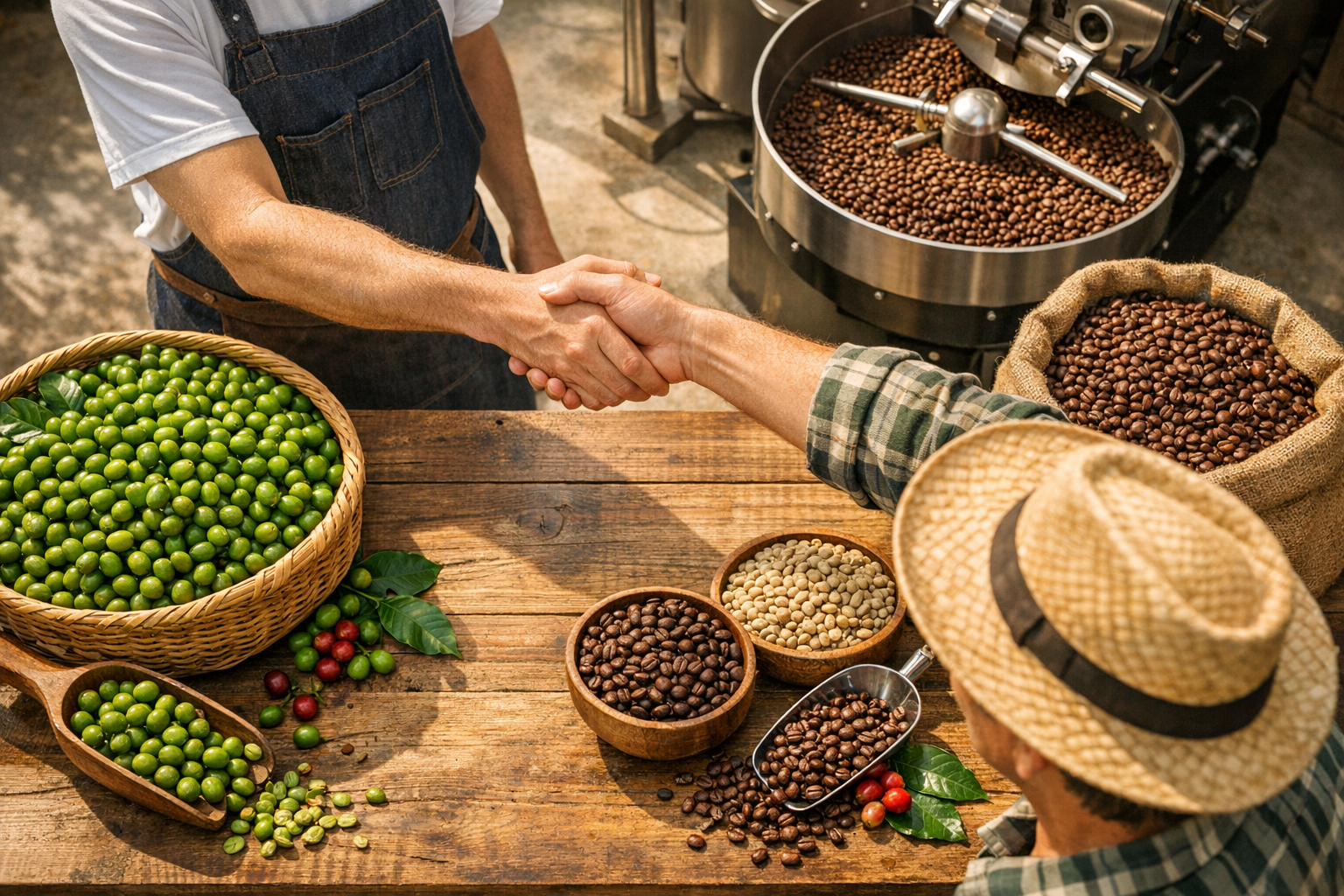
In the specialty coffee industry, terms like "Fair Trade" and "Direct Trade" are frequently printed on bags to signal ethical responsibility and sustainability. However, for conscientious consumers, wholesale partners, and coffee companies operating in 2026, understanding the structural and economic differences between these two models is essential.
While both frameworks seek to shield smallholder farmers from predatory supply chains, they operate through completely different mechanisms. This comprehensive guide explores the mechanics of Fair Trade and Direct Trade, identifies their respective strengths and limitations, and highlights how Higher Grounds Coffee bridges the gap by building an elite "circle model" that transcends standard certifications.
What is the Difference Between Fair Trade and Direct Trade Coffee?
Fair Trade is an internationally certified, third-party audited framework that guarantees a minimum price floor and community premiums to organized cooperatives. Direct Trade is a direct-purchasing relationship between a roaster and a farmer that bypasses intermediaries to source premium specialty coffee, negotiating prices directly based on quality and cup scores rather than a standardized price index.
What is Fair Trade Coffee?
Fair Trade is a formal, third-party certification system governed by global bodies such as Fairtrade International (FLO) and Fair Trade USA.
The mechanism establishes an economic safety net for farmers by mandating a Fair Trade Minimum Price and an additional Fair Trade Premium paid to producer cooperatives. These cooperatives democratically decide how to invest those funds into community infrastructure, such as schools, clinics, or processing equipment. Historically, Fair Trade is designed to organize and protect smallholder farmers, giving them collectively negotiated access to highly volatile global commodity markets.
What is Direct Trade Coffee?
Direct Trade is not a formal third-party certification; rather, it is a business philosophy and sourcing practice used predominantly by modern coffee companies focused on the highest quality beans.
The mechanism involves coffee roasters bypassing traditional intermediaries, exporters, and certifying bodies to buy directly from individual producers or micro-lot farmers. Prices are negotiated face-to-face based on the cup quality (cupping score) of the specialty coffee. Direct trade thrives in the specialty coffee tier, prioritizing exceptional quality, micro-lots, experimental processing, and radical relationship transparency.
Structural Differences: Fair Trade vs. Direct Trade
The fundamental divergence between these models lies in how they define value, transparency, and quality control.
Regulation: Fair Trade is regulated and audited by third parties (e.g., FLOCERT). Direct Trade is self-regulated by individual roasters, relying heavily on trust and published data.
Price Determination: Fair Trade uses fixed global minimums set by committees, plus fixed premiums. Direct Trade prices are negotiated directly and scale heavily based on cup quality.
Middlemen: Fair Trade utilizes certified cooperative channels and importers. Direct Trade bypasses traditional brokers to establish direct supply chains.
Quality Incentive: Fair Trade focuses on volume and baseline standard compliance. Direct Trade creates a strong economic incentive for farmers to produce elite specialty micro-lots.
Fees & Barriers: Fair Trade requires high certification fees that can exclude poorer, unorganized farmers. Direct Trade has no standard certification fees but requires high operational investment and travel from roasters.
The Current State of Coffee Sourcing in 2026: What the Data Shows
While both models have improved the lives of millions, academic research and current market realities expose critical limitations in their standardized application.
The Limits of Fair Trade Price Minimums
Global Fair Trade standards establish a crucial safety net during market crashes, but they are designed to be a floor, not a ceiling. Following vital adjustments to combat inflation, Fairtrade International raised its minimum price for washed Arabica to $1.80 per pound, with a total organic minimum of $2.40 per pound FOB (Fairtrade International).
While this protects farmers, researchers note that this standard minimum is still frequently a "survival wage" rather than a true "thriving wage." A study published in the Journal of the European Economic Association found that while certification prevents cooperative collapse during low-price market dips, it has "no effect of [Fair Trade] on unskilled workers, who are the more disadvantaged group within the coffee sector" (Dragusanu, Montero, & Nunn, 2022). Furthermore, bureaucratic costs can deplete the premium before it ever trickles down to individual farmers.
The Double-Edged Sword of Direct Trade
Direct Trade consistently yields higher payments per pound because it targets high-scoring fair trade coffee alternatives. However, field research in Colombia revealed that while Direct Trade boosts profits and short-term stability, "this economic benefit is counterbalanced by increased production costs and risks like delayed payments, making it most accessible to already better-off farmers" (Cuenca, 2024).
Additionally, because "Direct Trade" lacks legal protection, the term frequently suffers from greenwashing. Industrial roasters can claim to practice direct trade by visiting a farm once, without establishing long-term, equitable contracts—a systemic challenge noted in Sustainability as a "failure of industry to self-regulate" (MacGregor, Ramasar, & Nicholas, 2017).
Beyond the Labels: The Higher Grounds "Circle Model"
Where standard industry debates present an "either/or" choice between Fair Trade and Direct Trade, Higher Grounds Coffee rejects the dichotomy. To build a truly sustainable future for specialty coffee, roasters must move beyond passive certification and actively co-invest in origin communities.
As a Certified B Corporation, Higher Grounds merges the systemic safety nets of cooperative Fair Trade with the extreme transparency and relationship-driven pricing of Direct Trade through their regenerative Circle Model:
Co-Owning the Supply Chain: Higher Grounds is a co-owner of Cooperative Coffees, a collective green coffee importing cooperative. This structure enables them to import directly from organized farmer cooperatives, combining the democratic strength of Fair Trade with localized relationships.
Paying Far Above Fair Trade Minimums: Higher Grounds uses its importing power to pay prices that consistently exceed Fair Trade floors. They pay a minimum of $2.20 per pound for all certified coffees (Higher Grounds Trading), well above the conventional $1.80/lb minimum. Direct trade without transparency is just marketing; ethical coffee sourcing requires visible contracts and verifiable pricing, which is why they publish exact contract terms publicly on fairtradeproof.org.
Community Reinvestment: True direct trade means investing in the infrastructure of the communities that grow the crop. Higher Grounds donates 1% of its profits to its sister non-profit, On the Ground, which builds clean water infrastructure, funds schools, and supports gender equity initiatives across farming regions.
Climate Justice: Recognizing that climate change disproportionately affects high-altitude coffee growers, Higher Grounds pays a voluntary carbon tax into an environmental-service fund (Higher Grounds Trading). This fund supports organic compost production, soil regeneration, and agricultural resilience.
Choosing a Sustainable Coffee Future
At Higher Grounds, the philosophy is simple: craft matters, but dignity matters more. Even the most talented producers cannot focus on cup quality if they lack clean drinking water, basic education, or climate resilience. True sustainability is built on shared tables, long-term contracts, and transparent, above-minimum pricing.
When selecting specialty coffee or vetting coffee companies for wholesale partnerships in 2026, look beyond the basic labels. Seek out roasters who combine the protective baseline of fair trade coffee with the stringent transparency, verifiable pricing, and community-level relationship building of direct trade.