Higher Grounds Coffee: A purpose driven brand in a time of crisis
When Global Crisis arrives in the Coffeelands, Higher Grounds Coffee stands by its partners
Higher Grounds Coffee: A Purpose-Driven Brand in a Time of Crisis
The global coffee industry is navigating an era defined by severe, intersecting crises. Changing weather patterns and extreme climate events threaten yields in prime growing regions, while market price volatility places unprecedented strain on smallholder farming families. Concurrently, the specialty coffee landscape in North America has undergone massive corporate consolidation. Many pioneer roasters have been acquired by multinational conglomerates and private equity firms, leaving consumers to question whether the industry’s promise of ethical trade remains genuine or has simply become a marketing garnish.
Amidst these industry-wide shifts, Higher Grounds Coffee stands out as a resilient, independent model. Founded in Traverse City, Michigan, Higher Grounds demonstrates how embedding social justice, fair economics, and climate action directly into a business structure—rather than treating them as add-on campaigns—creates true supply chain resilience and long-term community impact during times of crisis.
Built Out of the Good Thing: The Higher Grounds Origin Story
Higher Grounds was not created as a conventional coffee enterprise that later adopted a social mission. Instead, the company was born directly out of community solidarity. In 2001, co-founder Chris Treter was living and working alongside Indigenous coffee farmers from the Maya Vinic cooperative in Chiapas, Mexico, during a post-graduate internship. Experiencing firsthand the severe economic hardships, lack of potable water, and systemic barriers faced by farming families, Treter collaborated with cooperative members to establish an international market outlet for their harvest.
In 2002, Higher Grounds began with a single bag of green coffee shipped from Chiapas to Michigan, hand-roasted and sold at a local farmers market. What began as a direct effort to support friends in Chiapas has evolved into a 24-year unbroken buying relationship with Maya Vinic. Today, while Higher Grounds sources organic specialty coffee from over a dozen producer partners across the globe, every trade relationship continues to be modeled after that foundational partnership.
Structural Ethics vs. Corporate Garnishes
As specialty coffee brands face acquisition by corporate conglomerates, Higher Grounds remains independent, founder-led, and farmer-partnered. What differentiates the brand during volatile market cycles is its structural commitment to equity across every step of the supply chain:
100% Fair Trade and Organic Certification: Every year and every single lot purchased by Higher Grounds is certified organic and fairly traded, guaranteeing premium baseline pricing for producer partners regardless of spot-market slumps.
Co-Owning the Supply Chain: Higher Grounds is one of roughly two dozen roaster-owners of Cooperative Coffees, the world’s first and only roaster-owned green coffee importing cooperative. By owning their importer, member roasters ensure complete transparency, eliminate unnecessary intermediary markups, and deal directly with farmer cooperatives.
60% Pre-Harvest Contract Financing: To shield coffee farmers from predatory local lenders and distress selling at seasonal price bottoms, Higher Grounds makes up to 60% of a contract’s total value available as an advance prior to harvest, enabling farmers to fund harvesting operations fairly.
Investing in Climate Resilience and Community Infrastructure
In times of climate distress and regional instability, traditional transactional purchasing models often fail small communities. Higher Grounds addresses systemic vulnerabilities through dual mechanisms focused on local infrastructure and climate adaptation:
"They roast coffee and do good things. We were built out of the good thing, and the coffee followed."
1. Clean Water and Social Infrastructure: On The Ground
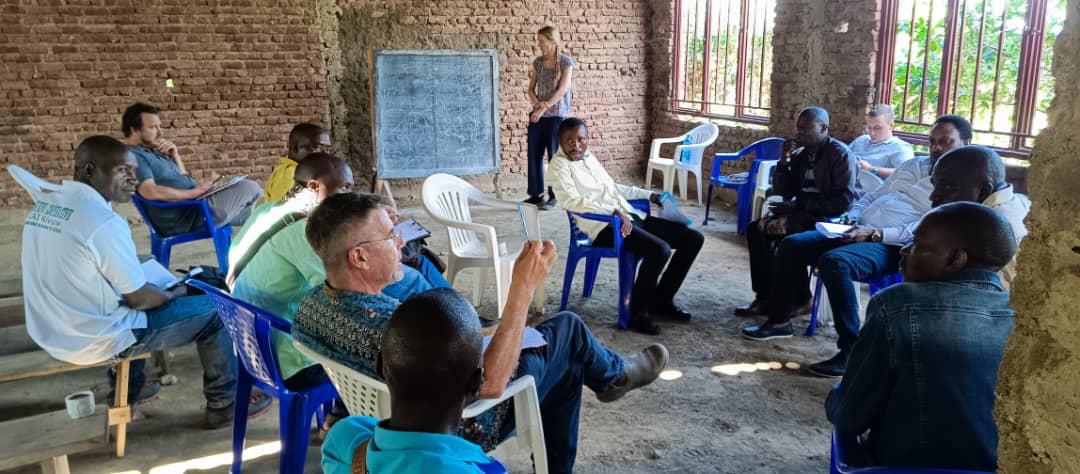
Recognizing that fair prices alone could not solve deep-seated community challenges like clean water access and educational healthcare infrastructure, Treter co-founded the Chiapas Water Project, which later grew into the non-profit partner On The Ground (OTG). Through OTG, Higher Grounds helps fund community-led development projects—including potable water systems, schools, and health facilities—in coffee-growing regions spanning Mexico, the Democratic Republic of Congo, Ethiopia, Palestine, and Nicaragua.
2. Regenerative Soil and Climate Adaptation
To combat the direct threats posed by rising temperatures and shifting weather patterns, Higher Grounds contributes 3 cents per pound of green coffee purchased to the Carbon, Climate & Coffee Initiative. These funds go directly toward farmer-led soil restoration, agroforestry, and climate adaptation projects, building ecological resilience in farming communities before crisis strikes.
The Moat of Long-Term Relationships
In specialty coffee, high quality and excellent roasts are baseline entry requirements. However, what sets Higher Grounds apart during times of economic turbulence is a quarter-century web of authentic, trusted relationships with farming co-ops such as Maya Vinic in Mexico, Muungano in the DRC, APECAFORM in Guatemala, and Canaan Fair Trade in Palestine.
By operating as a Certified B Corporation—the first coffee roaster in Michigan to achieve this distinction in 2016—Higher Grounds proves that business success and human integrity can be mutually reinforcing. As supply chains face increasing climate and economic strain worldwide, Higher Grounds Coffee serves as a compelling proof-of-concept: a purpose-driven brand built on structural ethics is not only equipped to endure crises, but provides a blueprint for a more equitable global economy.