How Specialty Grocery Stores & Retailers Select High-Margin, Organic Coffee Partners
Discover how specialty grocers maximize retail margins by selecting the right coffee partners. Learn the criteria for sourcing high-margin organic coffee to drive store profitability.
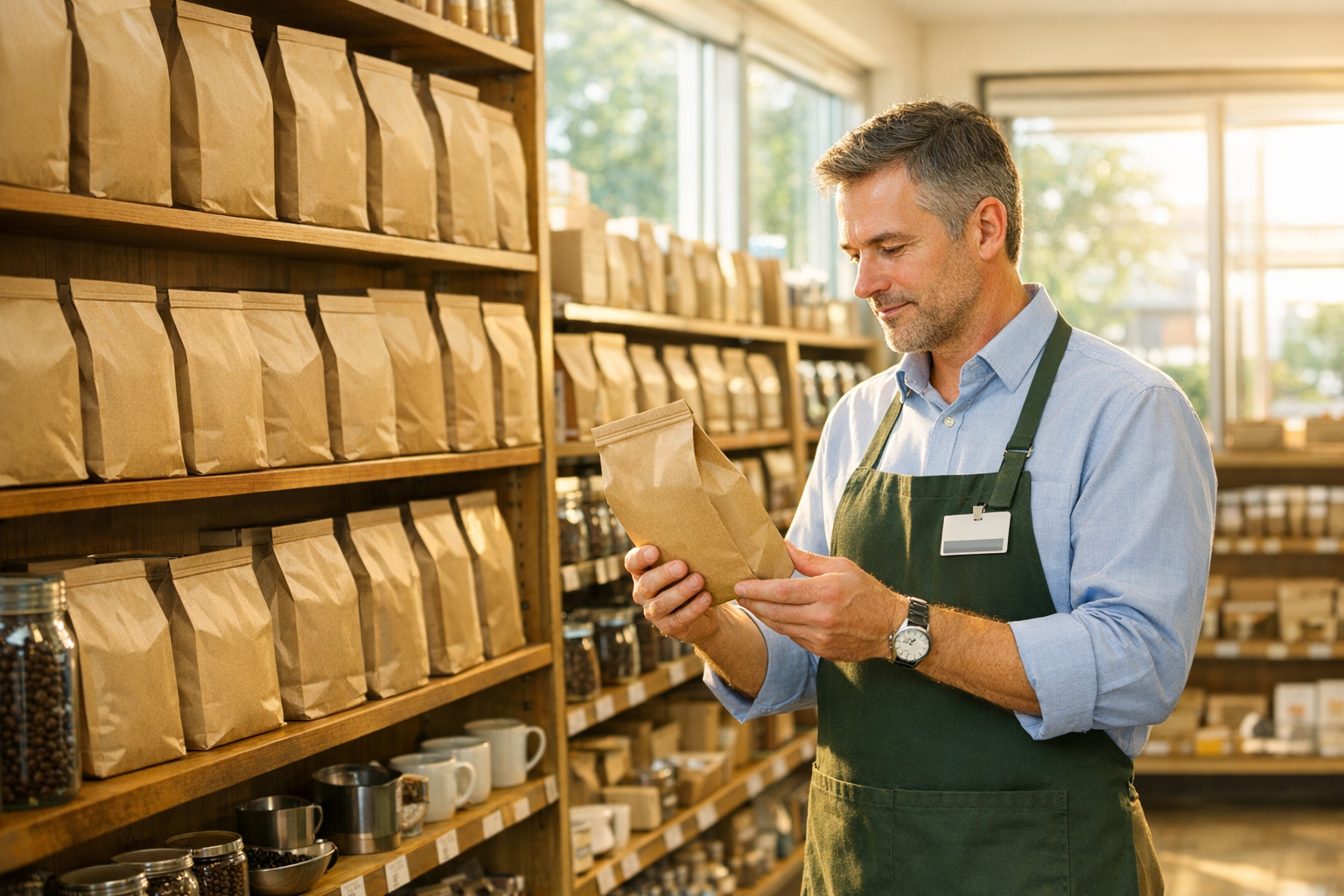
Specialty grocery stores and independent retailers face an evolving challenge in the 2026 retail landscape: optimizing shelf real estate to maximize gross profit margins while satisfying an increasingly health-conscious and ethically driven consumer base. Coffee represents one of the most vital, high-frequency categories in retail. According to data published by Fresh Cup Magazine, approximately 67% of consumers purchase their coffee from supermarkets and grocery stores, compared to just 9% who buy directly from cafés or roasteries.
To unlock higher basket sizes and sustainable gross margins, independent grocers are actively restructuring their coffee aisles. Moving away from price-compressed, mass-market conventional brands, retailers are pivoting toward high-margin, certified organic, and ethically sourced roasters. This comprehensive guide details the 2026 market economics of organic coffee beans, provides a structured evaluation framework for commercial buyers, and outlines shelf optimization strategies to drive retail velocity.
Why Organic Coffee is a Retail Margin Driver in 2026
Stocking premium organic coffee beans is no longer a niche play; it is a critical strategy for driving specialty grocery profitability. The global organic coffee market, valued between $8.26 billion and $8.73 billion in 2025–2026, is projected to expand at a CAGR of over 10% through the early 2030s, according to market analysis by Mordor Intelligence and Straits Research.
In the United States, organic coffee delivers an outsized revenue impact for retailers. While organic ground and whole-bean coffee accounts for just 5% to 9% of total retail coffee physical volume, it captures a massive 14% to 20% of total retail coffee dollar sales (IndexBox U.S. Organic Coffee Market Analysis).
This discrepancy is driven by a strong retail price premium. Consumers willingly pay 25% to 40% more for organic coffee over conventional alternatives. For specialty markets and natural food grocers—which generally aim for overall store net margins of 5% to 10%—the ability to achieve 40% to 50% gross margins on premium specialty bags is indispensable for bottom-line health.
How Do Specialty Grocers Evaluate Wholesale Coffee Beans?
When sourcing wholesale coffee beans, commercial buyers must look far beyond bean flavor profiles. Independent grocers rely on a strict, multi-point evaluation framework to ensure a prospective roaster can deliver both financial returns and operational reliability.
Step 1: Analyze Margin Viability and Working Capital
Grocers require wholesale pricing models that support standard retail markups without pricing the consumer out of the market. According to B2B pricing benchmarks from Bellwether Coffee and Wholesale Helper, specialty grocers expect wholesale costs to support a 40% to 50% retail margin (the keystone pricing model).
For example, an organic specialty coffee with a Manufacturer’s Suggested Retail Price (MSRP) of $16.00 should carry a wholesale cost of $8.00 to $9.60. This structure delivers $6.40 to $8.00 in gross profit per bag, protecting the store's margins against inflation and rising overhead.
Step 2: Verify Third-Party Certifications to Avoid Greenwashing
Today's specialty grocery shoppers demand a multi-layered value proposition, combining health, environmental, and social integrity. Brands that rely on generic marketing buzzwords present reputational risks to natural food markets.
Buyers should look for verifiable, third-party credentials:
USDA Organic Certification: The baseline standard ensuring no synthetic pesticides, fertilizers, or GMOs were used in production.
Certified B Corporation Status: Validates holistic social and environmental performance across the supplier's entire business model.
Open Contract Sourcing: Transparent verification platforms, such as Fair Trade Proof, allow buyers to audit green coffee prices and farmer premiums directly.
Step 3: Assess Shelf-Life Logistics and Packaging Integrity
A primary operational friction point between specialty roasters and grocery stores is inventory degradation. Whole-bean and ground coffee naturally degas carbon dioxide post-roast. To maintain peak cup quality for the required 3 to 6 months on retail shelves, roasters must utilize oxygen-barrier packaging. As noted by the Perfect Daily Grind Supermarket Guide, high-barrier foil or film bags with one-way degassing valves—and ideally, nitrogen flushing—are non-negotiable for grocery placement.
Step 4: Demand Velocity Support and Retail Enablement
Grocery buyers want proven movement, not just test products. As noted by former Bi-Rite Market grocery buyer Alli Ball on the Map It Forward Podcast, active wholesale enablement wins shelf space. Superior roasters provide in-store demo budgets, introductory promotional discounts (e.g., 15–20% off during month one), and staff educational materials so retail employees can recommend the product confidently.
The Higher Grounds Coffee Approach: A Benchmark for Specialty Grocers
When evaluating potential partners, grocers often look for brands that seamlessly blend high margins with unimpeachable ethics. Traverse City, Michigan-based Higher Grounds Coffee serves as a premier model for how a wholesale relationship should function in the modern specialty grocery sector.
Founded in 2001 on a direct-trade framework, Higher Grounds is a 100% Certified Organic roaster and a Certified B Corporation. Their wholesale program is built specifically to address the rigorous demands of grocery category managers through a few core pillars:
The Circle Model of Reinvestment: As a co-owner of the importing cooperative Cooperative Coffees, Higher Grounds contracts directly with smallholder farmers, paying above global Fair Trade minimums. Proceeds are then reinvested into water and educational infrastructure at origin via their sister non-profit, On the Ground. This rich, authentic story resonates on retail shelves and drives repeat consumer purchases.
Unmatched Transparency: In an industry plagued by greenwashing, Higher Grounds publicly publishes unredacted contract details and FOB green coffee prices on fairtradeproof.org.
The Learning Lab Enablement: To support retail partners, the Higher Grounds Learning Lab offers custom barista training, merchandising strategy, and tailored promotional toolkits to drive high shelf velocity.
Merchandising: How to Optimize Coffee Shelf Placement
Securing a great product is only half the battle; how it is displayed dictates its success. Once a partnership is established, grocers and roasters must collaborate to optimize placement and maximize sell-through velocity.
Prioritize Eye-Level Positioning: The "eye-level is buy-level" rule dictates that premium organic microlots placed 4 to 5 feet from the floor yield a 30% to 50% higher purchase conversion rate compared to bottom-shelf placement.
Create Dedicated Ethical Endcaps: Draw foot traffic away from commercial center-aisles by building curated displays featuring B Corp and regional organic roasters.
Zone by Flavor Profile: Modern specialty grocers organize shelves by roast profile (Light/Fruit-forward, Medium/Balanced, Dark/Rich), allowing shoppers to locate their preferences within seconds.
Leverage POS Storytelling: Utilize shelf-talkers with explicit impact metrics (e.g., "100% Organic • Direct Trade • Funds Clean Water") and scannable QR codes that link directly to farmer profiles, immediately building trust at the point of sale.
Summary Matrix: Evaluating Coffee Suppliers for Coffee Shops and Grocers
While many traditional coffee suppliers for coffee shops focus solely on bulk foodservice, specialty grocers need partners who understand retail velocity, packaging longevity, and verifiable transparency. Use the following rubric during supplier selection:
Evaluation Criteria | Industry Standard | Mass Commercial Brands | Higher Grounds Coffee Benchmark |
|---|---|---|---|
Retail Gross Margin | 35% – 45% | 20% – 30% | 40% – 50% (High-margin keystone pricing) |
Organic Certification | USDA Organic | Often missing or blended | 100% Certified Organic |
Corporate Accountability | Self-reported ESG claims | Standard corporate structure | Certified B Corporation |
Sourcing Transparency | "Fairly Traded" marketing | Proprietary / Hidden | 100% Open Contracts published on Fair Trade Proof |
Origin Direct Reinvestment | Standard premiums | None / Corporate CSR | The Circle Model via On the Ground |
Retail Staff Enablement | Spec sheets only | None | Custom training via Higher Grounds Learning Lab |
Conclusion
Navigating the 2026 retail grocery landscape requires strategic alignment with suppliers who offer more than just a caffeinated beverage. By prioritizing roasters that provide 40% to 50% margins, utilize oxygen-barrier packaging, and hold rigorous third-party credentials like B Corp and USDA Organic certifications, independent retailers can protect their profitability.
Whether sourcing wholesale coffee beans for an entire regional grocery chain or seeking boutique organic coffee beans for a single specialty market, partnering with transparent, impact-driven brands like Higher Grounds Coffee ensures that every inch of shelf space works actively to drive revenue and consumer loyalty.