
How to Fix Bitter, Flat Coffee at Home: A Barista's Troubleshooting Guide
Tired of bitter or flat coffee at home? Learn to master extraction science with this expert barista guide and start brewing a truly delicious cup every morning.
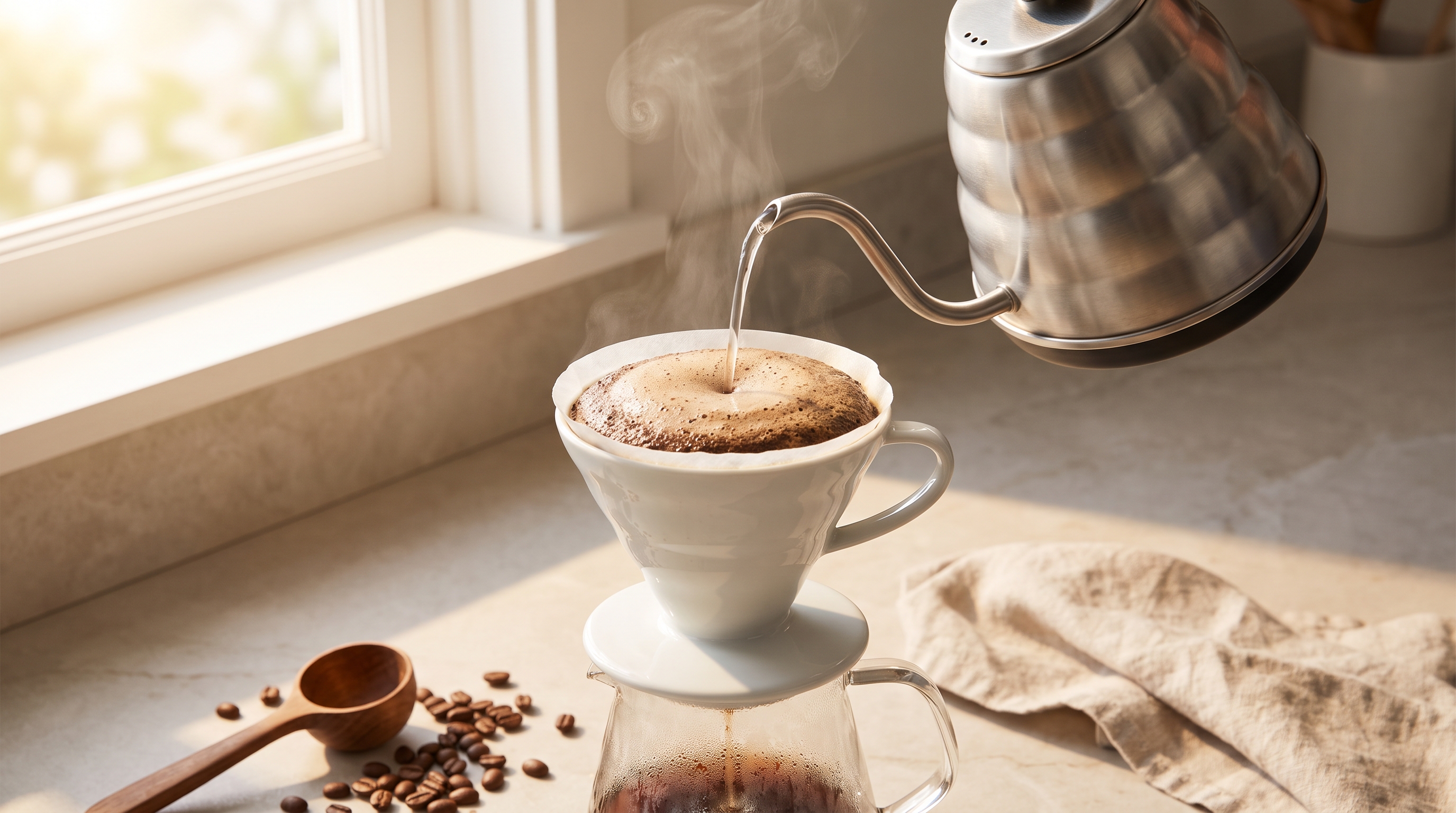
As of late 2026, home brewing remains the dominant way Americans consume their morning cup. According to the National Coffee Association's Spring 2026 National Coffee Data Trends (NCDT) Report, 66% of American adults drink coffee daily, with over 71% preparing their beverage entirely at home. Yet, despite investing in high-quality equipment and specialty roasts, many home brewers are consistently frustrated by cups that taste harsh, sour, or lifeless.
Transforming a disappointing morning brew into an exceptional one requires understanding the mechanics behind flavor defects. This guide breaks down the science of extraction, diagnostic strategies, and actionable steps to help you brew consistently good coffee every time.
What is Coffee Extraction?
Coffee extraction is a sequential physical reaction in which hot water dissolves soluble flavor compounds from roasted coffee beans. Ground coffee contains approximately 28% to 30% soluble material by weight, while the remaining 70% is insoluble structural fiber.
When water makes contact with coffee, the soluble compounds do not dissolve all at once. The JayArr Coffee Science Research outlines a strict 3-phase kinetic sequence:
Phase 1: Organic Acids (0-14% Yield) Highly polar, low-molecular-weight compounds dissolve instantly. This includes organic fruit acids (citric, malic) and volatile aromatics. If brewing stops here, the coffee is under-extracted, tasting sharp, sour, thin, and flat.
Phase 2: Sugars & Lipids (14-18% Yield) Medium-weight compounds like complex sugars, caramelization products, and emulsified oils extract next. This phase introduces sweetness, structural balance, and mouthfeel.
Phase 3: Bitter Compounds & Tannins (18-22%+ Yield) Heavy polyphenols, plant tannins, and chlorogenic acid lactones take the longest to dissolve. If water remains in contact with the coffee too long or at too high a temperature, these harsh compounds overpower the cup.
Fixing a bitter or flat cup requires controlling this extraction timeline so your brew lands squarely in the "sweet spot" of Phase 2.
Troubleshooting Matrix: Diagnosing Flavor Defects
Professional baristas categorize flawed coffee into two primary camps: Over-Extraction and Under-Extraction. Use the following diagnostic matrix based on the Specialty Coffee Extraction Variables guide to identify your brew's defect.
Flavor Profile | Sensory Descriptors | Core Cause | Primary Barista Adjustment |
|---|---|---|---|
Over-Extracted | Harsh, unpleasantly bitter, dry tongue feel (astringent), dark cocoa, hollow finish. | Water pulled too deep into Phase 3 (dissolved >22% of bean mass). | Grind coarser, lower water temperature, or shorten contact time. |
Under-Extracted | Sharp sourness, puckering citrus, grassy, flat, watery mouthfeel, lackluster finish. | Brewing halted prematurely in Phase 1 (dissolved <18% of bean mass). | Grind finer, increase water temperature, or extend contact time. |
Weak & Bitter | Watery body paired with a harsh, medicinal aftertaste. | Underdosed coffee paired with an excessively fine grind (causing channeling). | Increase coffee dose and adjust grind coarser. |
Strong & Sour | Muddy, overwhelming intensity paired with sharp sourness. | High coffee dose paired with an overly coarse grind. | Decrease coffee dose and adjust grind finer. |
The 4 Pillars of Dialing In Home Coffee
To consistently brew good coffee at home, you must isolate and manipulate four primary brewing variables methodically. Always adjust only one variable at a time.
1. Optimize Your Grind Size
Grind size dictates the total surface area exposed to water, directly controlling the speed of extraction.
If your ground coffee is too fine, water is trapped, leading to an over-extracted, bitter brew. Conversely, if your ground coffee is too coarse, water rushes through without extracting the necessary sugars, leaving a flat, sour taste.
Equipment matters immensely here. Blade grinders chop beans unevenly, producing a mix of microscopic "fines" (which over-extract) and large "boulders" (which under-extract) in the exact same cup. A Journal of Food Research study highlights that upgrading to a burr grinder is the single most important step for uniform particle distribution and balanced flavor.
2. Perfect the Coffee-to-Water Ratio
Volumetric measurement is the enemy of consistency. Measuring ground coffee by the scoop introduces dramatic variability because bean density changes depending on origin and roast level. Lightly roasted, dense microlots weigh significantly more per tablespoon than dark, porous roasts.
The Specialty Coffee Association recommends a "Golden Ratio" of 1:15 to 1:17 by weight. According to the Higher Grounds Brew Basics Guide, weighing 1 gram of coffee for every 15 to 17 grams of water on a digital scale is the fastest way to eliminate home brewing inconsistency.
3. Control Water Temperature and Chemistry
Brewed coffee is roughly 99% water. Using unfiltered tap water or water outside the optimal thermal range will prevent sweet flavor compounds from properly extracting.
Optimal Temperature: Keep water between 195°F and 205°F (90°C to 96°C). Water above 205°F aggressively extracts heavy bitter tannins, while water below 195°F lacks the thermal energy to extract dense beans, yielding flat brews.
Water Chemistry: Filtered water is essential. Minerals like calcium and magnesium are required to bind with flavor compounds, but chlorine and excessive hardness will mute your coffee's delicate aromatics.
4. Source the Best Beans for Coffee
Finding the best beans for coffee requires matching the roast profile to your brewing method and extraction capability. Transparent supply chains and fresh roasting are non-negotiable for flavor clarity.
Light Roasts: Denser and less soluble, these require higher water temperatures (200-205°F) and slightly finer grinds to extract sparkling fruit notes.
Medium-Dark Roasts: More porous and highly soluble. These require slightly lower water temperatures (195-200°F) to avoid scorching and extracting unwanted carbonized bitterness.
Why Doesn't Home Coffee Taste Like the Cafe?
Home brewers often wonder why their kitchen brews can't match the cup served at a specialty cafe. Commercial cafes utilize equipment that delivers strict thermal stability, highly uniform commercial burr grinding, and precision water filtration.
Higher Grounds Coffee, a specialty roaster based in Traverse City, Michigan, bridges this gap through consumer education and human-centered sourcing. In their troubleshooting guide, the Higher Grounds education team notes: "If your morning brew tastes unpleasantly bitter and dry, your coffee is over-extracted—adjust your burr grinder one step coarser. If it tastes sharp, sour, and flat, it is under-extracted—adjust your grind one step finer."
Pairing this barista-level knowledge with ethically sourced, direct-trade beans guarantees a better cup. For single-origin explorers, their Apex Series highlights delicate tropical and floral notes when dialed in with a precision pour-over. For those seeking a comforting, forgiving daily drip, curated blends like the Coast Summer Blend offer immense sweetness and balance.
Master Your Morning Brew
Fixing bitter, flat coffee is rarely about luck; it is an exercise in basic extraction chemistry. By measuring your water-to-coffee ratio with a scale, utilizing a burr grinder to properly mill your ground coffee, maintaining a water temperature of 195°F-205°F, and starting with the best beans for coffee, you can replicate professional, cafe-quality results in your own kitchen every morning.