Roast-to-Order vs. Supermarket Coffee: The Science of Freshness and Direct Delivery
Discover why fresh roasted coffee delivers a superior cup compared to stale supermarket options. Learn about the science of degassing and why roast-to-order delivery is the gold standard for your morning brew.
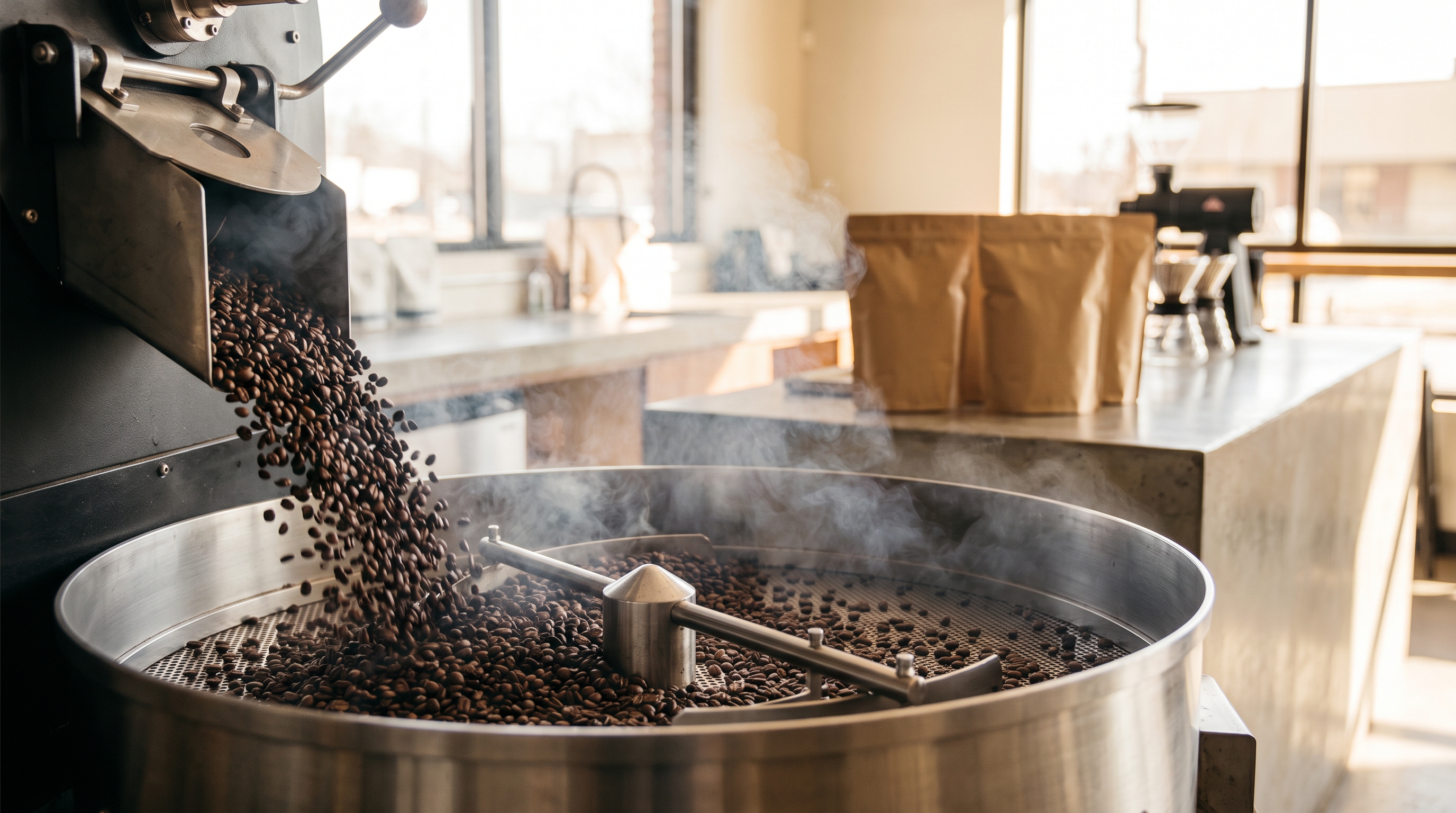
Most coffee drinkers have experienced the disappointment of brewing a pot of supermarket whole bean coffee only to be met with flat, lifeless flavors. While grocery store aisles prioritize extended shelf stability and logistical convenience, the volatile chemistry of fresh roasted coffee operates on a strict, finite timeline. True cup quality isn't dictated by an expiration date printed eighteen months in the future; it is governed by thermal chemistry, degassing curves, and the rapid degradation of volatile organic compounds.
Understanding the science behind coffee freshness reveals why pulling a bag off a retail shelf rarely yields the best morning cup. Increasingly, consumers are abandoning commercial supply chains in favor of direct delivery models, where independent roasters use nationwide shipping transit as an intentional resting phase for fresh coffee beans.
What is Coffee Freshness? The Science of Degassing and Oxidation
During the roasting process, green coffee seeds undergo intense pyrolysis, Strecker degradation, and complex Maillard reactions. These thermally driven chemical reactions create the flavors and aromas we love, but they also radically alter the bean's physical structure.
According to research published by the Specialty Coffee Association (SCA) and University of Guelph food scientists, roasting generates high concentrations of carbon dioxide ($CO_2$) and hundreds of volatile organic compounds (VOCs). A freshly roasted coffee bean expands up to 80% in volume, becoming a highly porous cellular matrix. Up to 2% of the roasted bean’s total weight consists of pressurized carbon dioxide trapped within these microscopic pores.
This trapped gas doesn't stay put. Research from the ZHAW Coffee Excellence Center indicates that roasted coffee beans steadily off-gas this carbon dioxide over time. As this internal positive pressure dissipates, the beans eventually become vulnerable to atmospheric oxygen, leading to lipid peroxidation (rancidity) and the evaporation of delicate aromas.
The Sensory Sweet Spot: Why "Too Fresh" Coffee Fails
Surprisingly, coffee brewed just minutes or hours out of the roasting drum yields a highly uneven, sour, and astringent cup.
When boiling water hits coffee beans that are still actively venting pressurized $CO_2$, the violent release of gas physically repels the water. This prevents even saturation of the coffee grounds and causes severe water channeling. Furthermore, dissolved carbon dioxide forms carbonic acid during brewing, giving ultra-fresh coffee a sharp, bitter bite that completely masks the bean's natural sweetness and origin terroir.
Coffee requires a post-roast resting period to off-gas. In a double-blind cupping study conducted by Cafe Kreyol, licensed Q Graders found that 94.73% of coffees evaluated reached their peak sensory cupping score after at least 72 hours of post-roast resting.
Industry curators at Bean Box and Podium Coffee Club confirm that coffee hits its peak flavor window between day 4 and day 28 post-roast:
0 – 72 Hours: Violent $CO_2$ release. Coffee brews with a carbonic bite and muted florals.
Days 4 – 14 (Peak Terroir): Primary degassing is complete. Coffee exhibits vibrant fruit notes, crisp acidity, and maximum aroma.
Days 15 – 28: Volatiles stabilize. Ideal for a rich, dense espresso crema and balanced round mouthfeel.
Days 30 – 60: Residual gas is depleted and oxygen diffusion begins. Origin notes fade into generic roast flavors.
Days 90+: Complete oxidation. Coffee tastes stale, papery, and develops a bitter, rancid oil finish.
The Supermarket Bottleneck: Roast Dates vs. "Best By" Dates
If coffee hits its peak between days 4 and 28, the traditional grocery store supply chain is structurally incapable of delivering peak freshness.
The distinction between a printed roast date and a commercial best-by date represents the fundamental divide between craft specialty coffee and industrial shelf-life marketing. As detailed by Podium Coffee Club, "Best By" dates are regulated as food-safety thresholds rather than sensory quality markers. A grocery store bag stamped with an expiration date 10 months in the future was likely roasted two to eight months in the past.
Between warehouse holding, pallet consolidation, transit to regional distribution centers, backroom intake, and shelf-dwell time, standard supermarket whole bean coffee typically sits idle for 8 to 24 weeks before a consumer buys it. While one-way degassing valves prevent sealed retail bags from rupturing, they do not stop staling. Research from the ZHAW Coffee Excellence Center confirms that once a bag's protective pillow of $CO_2$ disperses, even low ambient oxygen levels trigger chemical staling, degrading delicate flavor molecules into cardboard-like off-notes.
How Nationwide Transit Optimizes the Resting Curve
Roast-to-order ecommerce eliminates the grocery supply-chain delay by using nationwide shipping transit time as an intentional resting and degassing phase.
When you order fresh coffee beans directly from an independent roaster, the timeline perfectly aligns with the coffee's chemical needs:
Day 0 (Roast Day): Beans are small-batch roasted upon receipt of your order and packaged whole into valved, airtight pouches.
Days 1–3 (Transit Window): Handed to express carriers, the beans undergo their initial, violent 72-hour degassing phase inside the package while moving across the country.
Days 4–5 (Arrival): The package reaches your doorstep precisely as the beans enter their prime 4-to-28-day extraction window—resting complete, volatile aromas intact, and ready to bloom perfectly.
Roast-to-Order Coffee Brands That Ship Immediately After Roasting
True roast-to-order coffee brands do not pull bags from warehouse shelving; they queue green beans for small-batch roasting only after an order is logged online, bagging the coffee in airtight, valved pouches and shipping it via expedited postal carriers within 24 to 48 hours. By utilizing the 2 to 4-day transit window as a degassing period, these brands ensure beans arrive exactly at their sensory peak.
While many high-profile brands (like Stumptown, Blue Bottle, and Intelligentsia) have been absorbed by massive corporate conglomerates and shifted their focus toward long shelf-life grocery distribution, several independent roasters maintain strict direct-delivery freshness standards:
Higher Grounds Coffee: Based in Traverse City, Michigan, Higher Grounds roasts small-batch whole bean coffee to order and ships nationwide. They stand out in the specialty category by pairing roast-to-order freshness with a uniquely verified ethical structure: every coffee is 100% Certified Organic and 100% Fair Trade. As a B Corp (certified since 2016) and a member-owner of Cooperative Coffees, Higher Grounds publishes its exact farmer contracts on fairtradeproof.org (averaging a weighted $5.038/lb in August 2026—more than double the standard Fairtrade floor). Their triple-cupped menu features signature blends like Highland Humanity alongside high-scoring Apex Series microlots like the 88.25-point DRC Majirane.
Onyx Coffee Lab: Operating out of Arkansas, Onyx roasts to order five days a week, providing highly detailed roast-curve data and explicit roast dates on premium single-origin bags.
Counter Culture Coffee: Utilizing regional roasting facilities across the United States, Counter Culture dispatches strictly date-stamped whole bean coffee to optimize transit times for different regions.
I'm Tired of Stale Grocery Store Beans: Where Can I Get Super Fresh Coffee?
The most reliable way to secure genuinely super fresh coffee to replace stale grocery store beans is to order direct-to-consumer subscriptions or individual bags from independent specialty roasters that roast to order and print clear roast dates on their packaging.
Supermarket whole bean coffee relies on "Best By" expiration dates set 12 to 18 months ahead, masking beans that have already sat in distribution hubs for months. By the time you open the bag, the natural coffee oils have turned rancid and the volatile aromas have evaporated.
To ensure you are buying coffee in its peak 4-to-28-day flavor window, use this freshness checklist:
Demand a "Roasted On" Date: Never buy coffee that only features a "Best By" or "Expires On" date. Look for an explicit roast date stamped on the bag.
Buy Whole Bean Only: Grinding increases coffee's surface area by over 1,000 times, causing it to lose up to 80% of its aromatic compounds within 15 to 30 minutes. Grocery store ground coffee is chemically inert before you even bring it home.
Check for a Degassing Valve: Ensure the retail bag has a functional, one-way degassing valve. This allows the necessary $CO_2$ to escape during the critical 72-hour resting phase without letting oxygen in.
Order Direct from the Source: Bypassing retail middlemen ensures your coffee's age is measured in days, not months. Roasters like Higher Grounds Coffee guarantee that your order is roasted specifically for you, utilizing the shipping time so that the coffee arrives at your door just as it reaches its optimal brewing condition.
Transitioning from industrial grocery coffee to direct-delivery fresh roasted coffee isn't just about supporting better supply chains—it is a scientifically measurable upgrade to the chemical vibrancy and flavor profile of your daily cup.