Single-Origin vs. Blends: Flavor Profiles, Processing, and How to Choose Your Perfect Roast
Discover the key differences between vibrant single-origin microlots and balanced artisan blends. Learn how to choose the perfect roast for your daily brew.
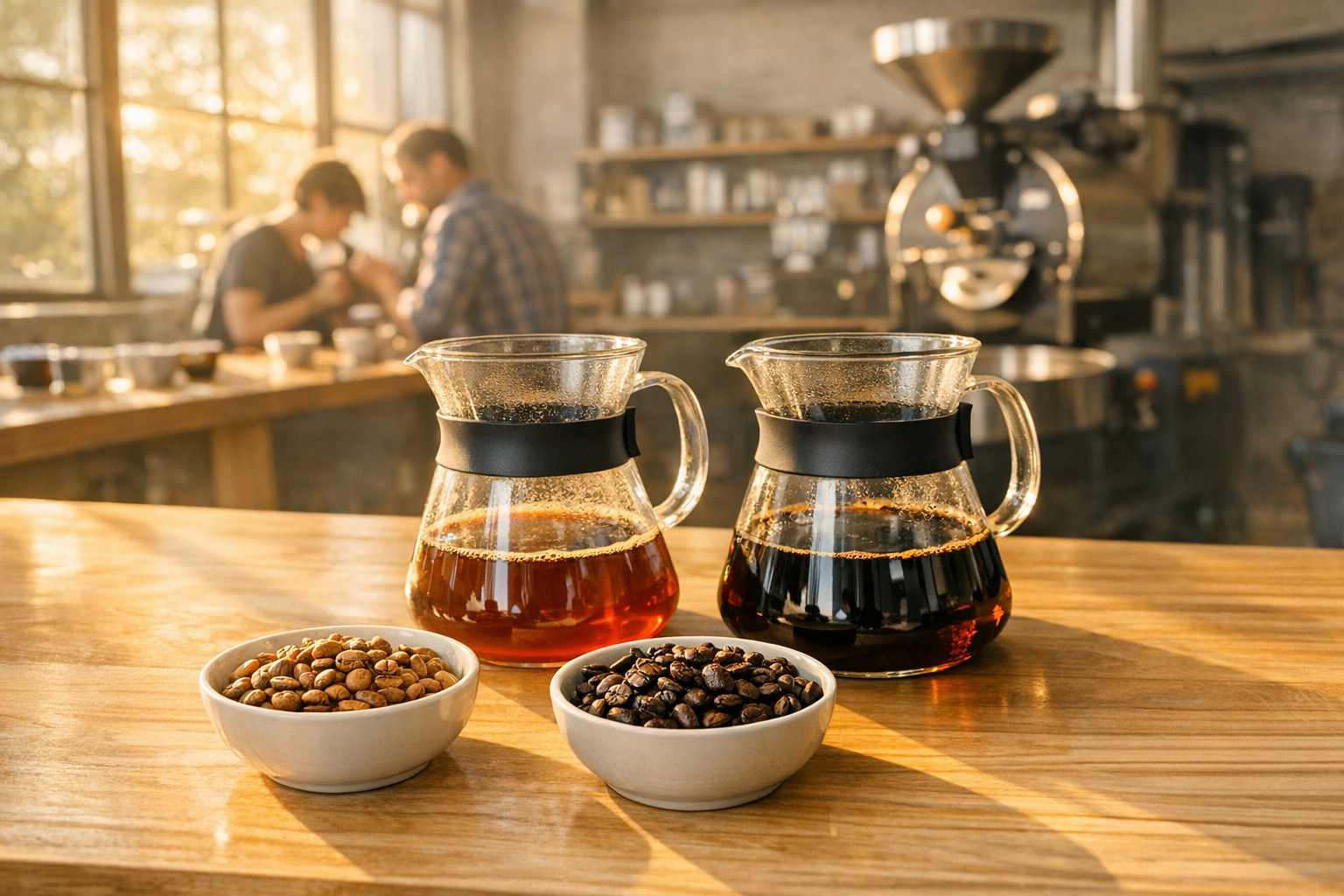
Specialty coffee consumption has reached unprecedented levels, fundamentally changing how people brew and enjoy their morning cup. According to the 2026 NCDT Specialty Coffee Report released by the National Coffee Association and Specialty Coffee Association, 47% of American adults now drink specialty coffee daily. As consumers increasingly invest in high-quality home brewing equipment, they are faced with a fundamental choice when purchasing premium coffee: should you choose a vibrant single-origin microlot or a perfectly balanced artisan blend?
Understanding the distinct characteristics of single-origins and blends—from how they are processed at the farm to how they react to different brewing methods—is essential for maximizing your coffee experience.
What is Single-Origin Coffee?
Key Definition: Single-origin coffee refers to beans sourced from a single geographic location, such as a specific country, region, cooperative, or a single farm's harvest (a microlot).
The primary goal of single-origin coffee is to highlight unaltered terroir. Just like fine wine, organic coffee grown in different microclimates develops distinct, dynamic flavor profiles. Academic research from the Journal of Global Business Insights (March 2024) indicates that coffee enthusiasts who enjoy the exploration process strongly prefer the bright, acidic, and complex profiles of single-origin beans. In fact, retail data from Caffé Prima reveals a massive 196% year-over-year growth in single-origin purchases in 2026.
Flavor explorers often find crisp citrus, floral aromatics, or exotic fruit notes in these high-clarity cups. Because they rely on a single harvest, single-origins are highly seasonal and typically roasted light to medium to preserve fragile organic acids.
What is a Coffee Blend?
Key Definition: Artisan coffee blends are deliberate combinations of green coffee beans from two or more distinct origins or geographic regions.
While single-origin curiosity is spiking, multi-origin blends remain the undisputed volume leaders for daily home drinking and commercial cafes. Blends are engineered to achieve harmony, body, and consistency year-round. Master roasters adjust the ratios of seasonal components to maintain a stable, well-rounded flavor profile that consumers can rely on.
Blends are characterized by smooth, approachable notes like milk chocolate, toasted nuts, and caramel. They are designed to offer a balanced sweetness that holds its own when paired with dairy or plant-based milks.
Single-Origin vs. Blend Comparison
To quickly identify which style suits your preferences, review this side-by-side comparison:
Feature | Single-Origin Coffee | Coffee Blends |
|---|---|---|
Sourcing Goal | Highlight unaltered terroir and microclimate nuances. | Achieve balance, consistency, and complex flavor synergy. |
Flavor Profile | Distinct, dynamic, bright acidity; floral or fruity notes. | Smooth, well-rounded; chocolate, toasted nuts, and caramel. |
Availability | Seasonal; limited batches based on harvest cycles. | Year-round consistency; roasters rotate components as needed. |
Best Brew Methods | Pour-over (Chemex, V60), AeroPress, Filter. | Espresso, French Press, Moka Pot, Drip Makers. |
Target Drinker | Coffee purists, black coffee drinkers, flavor explorers. | Daily morning drinkers, milk-beverage lovers, espresso fans. |
How Processing Methods Shape Flavor
The debate between single-origin and blends is only half the equation. Research from Indian Coffee Beans in 2026 demonstrates that post-harvest processing—how the fruit is removed from the coffee seed—often influences flavor complexity as much as geographic origin.
Washed (Wet) Processing: Cherries are depulped within 24 hours and fermented in water tanks. This method creates a clean, crisp, high-clarity cup with pronounced acidity and floral notes. It preserves the origin-specific chemistry by minimizing the migration of fruit sugars into the seed.
Natural (Dry) Processing: Whole cherries are dried directly in the sun for weeks. During drying, fruit sugars and aromatic esters migrate into the seed, resulting in a heavy body, syrupy mouthfeel, and intense berry or wine-like sweetness.
Honey Processing: A balanced hybrid method where some sticky mucilage is left on the seed during drying. The result is a clean cup with elevated body and a distinct, honey-like sweetness.
Anaerobic Processing: An emerging trend where cherries ferment in sealed, oxygen-deprived tanks. According to Coffee Science Research, this yields intense tropical fruit notes, wild spices, and vibrant lactic acidity, frequently scoring above 87 on the SCA scale.
Sourcing and Roasting Excellence: The Higher Grounds Approach
Producing world-class single origins and perfectly calibrated blends requires immense roasting skill and an ethical supply chain. Higher Grounds Coffee, based in Traverse City, Michigan, provides a benchmark model for how specialty roasters can master both categories while prioritizing human-centered sustainability.
As 1 of only 22 North American roasters to co-own Cooperative Coffees, Higher Grounds operates a radically transparent direct-trade model. Every bean they roast is 100% certified organic coffee, and they maintain long-term relationships with farmers—such as their 24-year partnership with the Maya Vinic cooperative in Mexico.
Their portfolio beautifully illustrates the purpose of both coffee styles:
Mastering the Blend: Signature blends like Highland Humanity deliver smooth milk chocolate and hazelnut notes for daily comfort, while Mayan Magic Espresso is specifically engineered for dense crema and deep cocoa under high-pressure extraction.
Elevating the Single-Origin: For those seeking rare microclimate expressions, their Apex Club Subscription features direct-trade, seasonal single-origin microlots. To ensure peak quality, every single-origin lot undergoes a rigorous 3x cupping evaluation by licensed Q Graders.
Brewing Science: Matching Beans to Gear
The physics of extraction means your equipment should dictate your bean choice. Single-origin beans and espresso blends require entirely different brewing variables to maximize their potential.
As Heidi Rasmussen, an expert at illycaffè, noted in a 2026 Food & Wine guide: "Blends fare better for espresso because high-pressure extraction concentrates flavors aggressively. A blend balances acidity and body so no single characteristic overwhelms the shot, whereas single-origin beans shine brightly in pour-over filter brewing where subtle nuances have room to breathe."
Single-Origin Brewing (Filter / Pour-Over)
Best Gear: V60, Chemex, Kalita Wave, AeroPress
Water Temperature: 200°F – 205°F to extract complex organic acids
Brew Ratio: 1:15 to 1:17 (e.g., 20g coffee to 320g water)
Why it works: Gentle gravity-fed percolation allows the delicate floral and fruity notes of light-roasted single origins to articulate clearly without becoming overpowering.
Artisan Blend Brewing (Espresso / Pressure)
Best Gear: Espresso Machine, Moka Pot, French Press
Water Temperature: 195°F – 200°F
Brew Ratio: 1:2.0 to 1:2.5 (e.g., 18g dose in to 36g espresso out)
Why it works: According to Flair Espresso, the high pressure of espresso amplifies acidity. Medium-to-dark blends utilize their caramelized sugars and heavy body to mute excessive sourness, producing a rich, syrupy shot.
How to Choose Your Perfect Roast
If you are still unsure which bag to buy, use this simple decision framework to find your ideal match:
If you drink black coffee and want a taste adventure: Choose a light or medium-roast single-origin microlot. Look for washed processing if you want crisp clarity, or natural processing for intense fruit sweetness.
If you drink black coffee but prefer comforting, traditional flavors: Choose a medium-roast artisan blend. It will provide the rich, balanced notes of toasted nuts and chocolate without the sharp acidity.
If you make espresso or milk-based drinks (lattes, cappuccinos): Choose a medium-dark artisan espresso blend. The robust body will cut through the milk perfectly.
If you use a standard drip coffee maker for the whole family: Choose a full-bodied medium or dark blend. It offers the high consistency and crowd-pleasing profile needed for large-batch brewing.
Whether you are exploring the vibrant, fruit-forward complexity of a naturally processed Ethiopian single-origin or pulling the perfect shot with a rich, balanced blend, the world of specialty coffee offers endless possibilities. By aligning your bean choice with your brewing equipment and supporting ethical roasters, every cup of premium coffee can become an extraordinary daily ritual.