Sustainable Coffee Programs for Hotels, Restaurants, and Hospitality Operations
Discover how luxury hotels and restaurants can elevate guest experiences through sustainable coffee programs. Learn how ethical sourcing impacts your brand reputation and overall profitability.
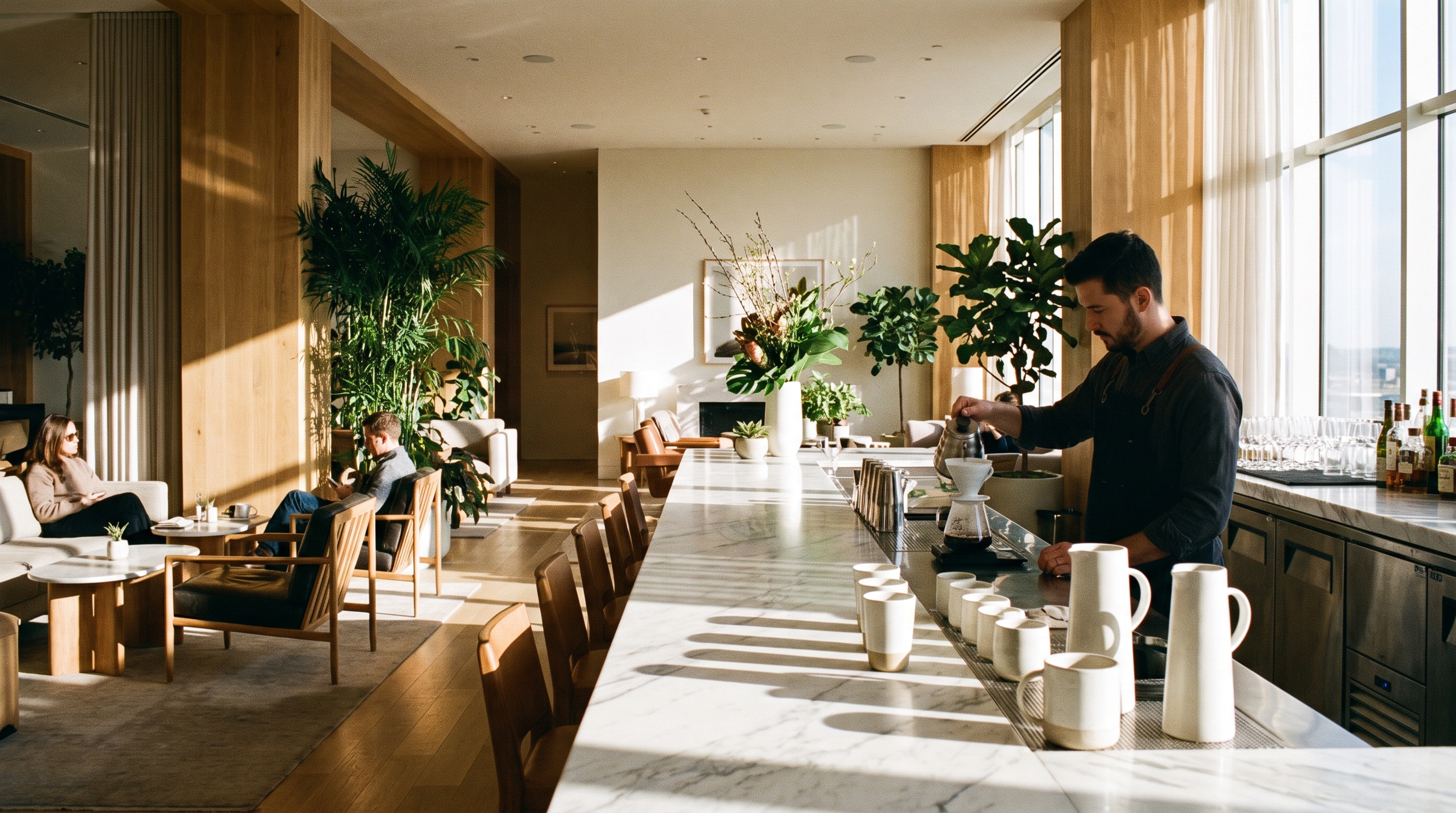
For high-end hotels and restaurants in 2026, serving sustainable coffee is no longer an ancillary amenity—it is a frontline indicator of a property's culinary integrity and ethical standards. As modern diners and luxury guests increasingly scrutinize the environmental footprint and ethical provenance of their food and beverages, hospitality operators are reevaluating their procurement strategies. Moving away from bulk commercial coffee distributors, industry leaders are instead building resilient, organic programs that align with authentic environmental, social, and governance (ESG) commitments.
The financial stakes for these upgrades are substantial. According to Mordor Intelligence, the global foodservice coffee market reached $555.13 billion in 2026, with the dedicated hotel and resort segment valued at $108.55 billion by Business Research Insights. This comprehensive guide explores how fine-dining establishments and hospitality venues can construct high-performance coffee programs that meet today's rigorous guest expectations.
What is a Sustainable Hospitality Coffee Program?
A sustainable hospitality coffee program is an integrated beverage strategy that prioritizes ethically sourced, environmentally sound, and transparently traded coffee across all venue touchpoints—from lobby espresso bars to in-room brewing. Unlike traditional commodity coffee programs that prioritize low bulk pricing, sustainable programs ensure a guaranteed price floor for farmers, utilize climate-resilient agricultural practices, and rely on verifiable third-party certifications like organic and fair trade.
The Business Case for Ethical Sourcing in 2026
Guest discernment regarding food and beverage ethics has reached a new inflection point, driven primarily by Gen Z, Millennial, and luxury travelers who demand supply chain transparency.
Ethical booking decisions are now a primary driver of revenue. A 2026 report by Busy Bean Coffee highlights that 78% of luxury travelers prefer a hotel offering verified ethical sourcing over comparable alternatives. Furthermore, conjoint analysis published in the International Journal of Management and Sustainability identified "Awareness of Practices" and "Sustainable Sourcing" as the top two determinants shaping Gen Z hotel preferences.
This shift in consumer preference directly impacts a property's bottom line:
Guest Satisfaction: Properties transitioning from commodity blends to certified fair trade coffee programs see an average 22% increase in breakfast guest satisfaction scores.
Increased Bookings: Verified ethical programs generate up to a 15% lift in direct bookings from eco-conscious travelers.
Higher Revenue: Properties demonstrating third-party-verified sustainability achieve a 5% to 10% higher Average Daily Rate (ADR) compared to non-certified peers, according to the Cornell University Center for Hospitality Research.
How to Build a High-Performance Coffee Program
To satisfy discerning guests, hospitality operators must replace fragmented offerings with a venue-wide strategy that elevates quality across every touchpoint.
1. In-Room Solutions Beyond Single-Use Plastics
Traditional hospitality in-room coffee relied on plastic pods or freeze-dried sachets, which directly conflict with zero-waste initiatives. Leading properties are now adopting BPI-certified 100% commercially compostable single-serve pods, steeped coffee bags, and precision French-press setups featuring fresh, pre-portioned specialty coffee.
2. Dining Room and Fine Dining Service
In fine dining, coffee is frequently the final sensory impression of a meal. Serving stale commodity blends diminishes a high-end tasting menu. Modern restaurants are incorporating:
Single-origin offerings with tasting notes that mirror the venue's wine and craft cocktail programs.
Chemical-free decaffeinated coffee (e.g., Swiss Water Process) ensuring evening guests experience the same nuance as caffeinated drinkers.
Elevated coffee cocktails, such as cold brew negronis and zero-proof coffee mocktails.
3. Banquets and Conferencing
Conference attendees in 2026 expect specialty-level coffee at scale. Transitioning banquet operations to sustainably grown batch-brewed coffees, held in vacuum-insulated servers, eliminates heating-plate bitterness while actively curbing food waste.
The Financial and Operational ROI of Premium Coffee
The primary barrier preventing directors from upgrading is rarely the cost of the beans; it is operational execution. However, wholesale procurement analyses by Tastoca reveal that coffee maintains one of the highest margin profiles in food and beverage.
While sourcing high-grade organic and fair trade coffee increases the raw bean cost by approximately $0.08 to $0.16 per cup, operators can command a $1.00 to $3.00 premium per beverage. More importantly, proper equipment calibration—including commercial water filtration and standard portion control—can reduce daily dry-coffee waste by 30% to 45%, effectively counterbalancing the higher cost of premium sourcing.
Navigating Sourcing Transparency: Avoiding Greenwashing
Hospitality procurement teams must navigate competing sustainability claims to avoid greenwashing. Understanding the structural differences in sourcing models is essential when vetting a new coffee supplier.
Sourcing Model | Third-Party Auditing | Farmer Economic Floor | Supply-Chain Transparency |
|---|---|---|---|
Conventional Commodity | None | None (tied to fluctuating 'C' Market) | Minimal (multi-tier middlemen) |
Corporate "Direct Trade" | Rare / Internal | Discretionary (set by roaster) | Selective marketing stories |
Fair Trade Certified | Yes (FLO / Fair Trade USA) | Guaranteed price floor + premium | Moderate to High |
Cooperative Importer Ownership | Independent & Publicly Audited | Floor + Quality Premiums + Pre-Financing | Complete (contracts open to public) |
Choosing the Right Partner: The Higher Grounds Coffee Approach
For F&B directors seeking an authentically sustainable coffee supplier, Higher Grounds Coffee exemplifies structural, verified sustainability. While many national brands have been absorbed by multinational conglomerates, Higher Grounds operates as a 100% independent, founder-led roaster built entirely around a human-centered sourcing model.
Higher Grounds provides a blueprint for what high-end hospitality venues should look for in a roasting partner:
100% Organic & Fair Trade: Rather than offering a token ethical blend, 100% of the coffee roasted by Higher Grounds is certified organic and fairly traded.
Radical Transparency: As a member-owner of Cooperative Coffees, they provide producer cooperatives with up to 60% of their contract value as pre-harvest financing. Sourcing contracts and prices are openly published via Fair Trade Proof.
Philanthropic Reinvestment: As Michigan's first coffee roaster to earn B Corp certification, they contribute 3¢ per pound directly to climate resilience projects at origin, alongside funding clean water and gender equity initiatives through their sister nonprofit, On the Ground.
Turnkey Staff Training: Through the Coffee Learning Lab, Higher Grounds provides hospitality partners with customized workflow optimization, extraction training, and batch-brew calibration led by Authorized SCA Trainers.
Sourcing Checklist for Hospitality Procurement Executives
When vetting coffee distributors or roasting partners for your hotel or restaurant, use this critical checklist to ensure authentic sustainability:
100% Certified Lineup: Does the roaster certify their entire portfolio as Organic and Fair Trade, or is it confined to a secondary SKU?
Contract Transparency: Can the supplier verify actual prices paid to producer cooperatives on a public ledger?
Climate Initiatives: Does the roaster contribute direct funds to regenerative agriculture and climate adaptation at origin?
Education & Quality Assurance: Does the partnership include access to certified trainers and regular equipment calibration?
Compostable Solutions: Are 100% commercially compostable packaging solutions available for in-room amenities and banquets?
By prioritizing transparent sourcing and operational excellence, modern hospitality venues can transform their beverage programs into powerful extensions of their brand's ethical identity.