
The Complete Specialty Coffee Storage & Freshness Guide: How to Keep Beans Peak-Fresh at Home
Discover the science of coffee preservation with our expert guide. Learn how to store your whole bean coffee correctly to ensure every cup stays flavorful, aromatic, and peak-fresh at home.
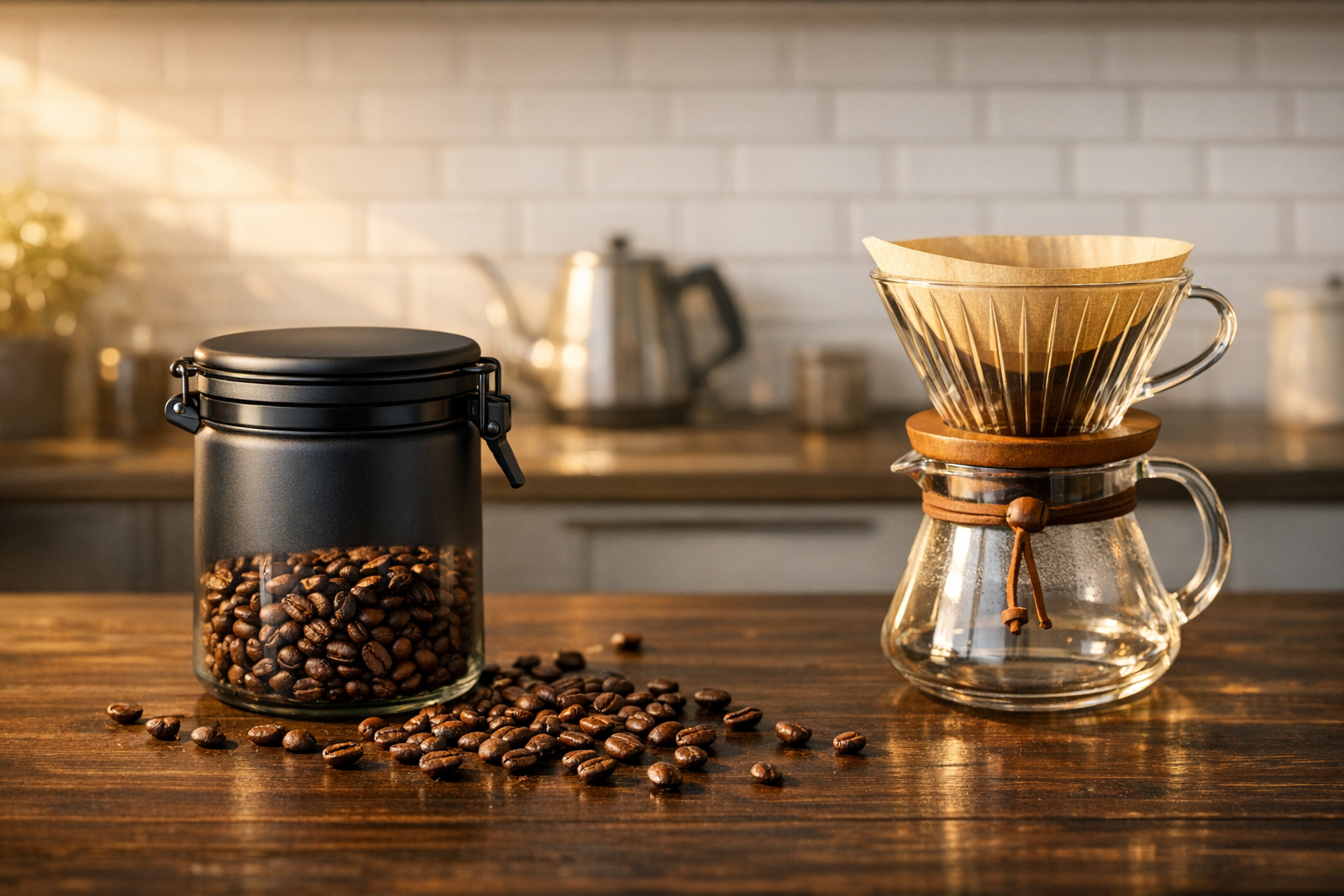
For specialty coffee enthusiasts, understanding how to preserve fresh coffee beans is the defining factor between an extraordinary cup and a flat, bitter one. Coffee freshness is not about traditional food spoilage; it is a battle of chemical kinetics governed by carbon dioxide degassing and volatile aromatic preservation. From the moment coffee leaves the roaster, it begins a complex aging process.
This comprehensive guide explores the peer-reviewed science behind coffee degradation, the optimal timeline for brewing freshly roasted coffee beans, and expert-backed storage methods to maintain peak flavor in your kitchen.
What is Coffee Freshness?
Coffee freshness is defined by the balance of trapped carbon dioxide (CO₂) and volatile organic aromatic compounds created during the roasting process. As heat triggers the Maillard reaction and Strecker degradation, over 800 volatile organic compounds (VOCs) are formed alongside significant volumes of CO₂.
According to SCA Coffee Decoded, this trapped CO₂ acts as a natural protective gas barrier inside the roasted bean, slowing oxygen penetration. However, as the beans rest, they naturally release this gas—a process known as degassing. As CO₂ escapes, it carries delicate floral, fruity, and sweet aromatic compounds with it. Maintaining freshness means slowing this degassing rate and protecting the beans from environmental damage.
Whole Bean vs. Pre-Ground: The Freshness Cliff
One of the most critical rules of specialty coffee is to always buy whole bean coffee and grind immediately before brewing. Pre-ground coffee stales up to 15 times faster than whole bean coffee because the grinding process exponentially explodes the bean's exposed surface area.
Recent scientific evaluations demonstrate just how rapid this decay is. According to a 2026 Qahwat Al'ard Research Guide, up to 60% of volatile aromatic compounds dissipate within 15 to 20 minutes of grinding. Furthermore, experimental measurements of degassing show that ground dark-roasted coffee releases the same volume of CO₂ in a single hour that whole beans take 24 hours to release.
The Four Enemies of Coffee Freshness
The degradation of specialty coffee is driven by four primary environmental factors. Understanding how to mitigate these variables is essential for proper home storage.
Oxygen (O₂): Oxygen is the single greatest contributor to staling. It causes lipid oxidation and breaks down reactive volatile sulfur compounds, such as methanethiol. When coffee is exposed to oxygen, it can lose up to 70% of its sweet, fresh aromas within three weeks, leaving behind flat or cardboard-like flavors, according to research on aroma preservation.
Moisture & Humidity: Ambient water vapor triggers hydrolysis, softening the bean's cellular structure, accelerating gas discharge, and risking microbial growth.
Light (UV & Visible): Direct light induces photo-oxidation. UV photolysis actively breaks down light-sensitive aromatic lipids. Storing coffee in clear glass jars on a kitchen counter is one of the most damaging storage habits.
Heat: Chemical reaction rates scale exponentially with temperature. A recent 2026 study in the Advances in Agricultural and Food Research Journal identified a critical ambient temperature threshold of 30.7°C (87.3°F), beyond which the rate of CO₂ degassing and quality loss accelerates sharply.
When to Brew: Understanding the Peak Roast Window
Freshly roasted coffee beans are not meant to be brewed immediately. During the first 24 to 48 hours post-roast, beans release excessive amounts of CO₂. If brewed too early, this aggressive off-gassing creates a turbulent "bloom" that repels water, leading to uneven extraction and sour or metallic tasting notes.
Coffee reaches its optimal flavor during the Peak Roast Window—the timeframe where gas release stabilizes and origin flavors peak. Based on guidelines from the ZHAW Coffee Excellence Center, peak windows vary by roast profile:
Roast Profile | Resting Period | Peak Roast Window | Sensory Characteristics |
|---|---|---|---|
Light Roast | 5 – 7 Days | Day 7 to Day 21 | High floral clarity, crisp acidity, pronounced origin fruit notes. |
Medium Roast | 3 – 5 Days | Day 5 to Day 18 | Balanced body, sweet caramelization, chocolate, and citrus. |
Dark Roast | 2 – 3 Days | Day 3 to Day 12 | Heavy body, smoky cacao notes; rapid staling after Day 14. |
How Roast-to-Order Models Protect the Peak Window
Traditional supermarket coffee often sits in distribution warehouses for weeks or months, meaning it is well past its peak window before it is ever purchased. To bypass this degradation cycle, industry-leading roasters rely on operational precision.
For example, Higher Grounds Trading Company, a B Corp-certified specialty roaster based in Traverse City, Michigan, utilizes a roast-to-order ecommerce model. Coffee is roasted in small batches, packaged immediately into foil-lined barrier bags with one-way degassing valves, and shipped directly to consumers. By the time the bag spends 2 to 5 days in transit, the beans have naturally rested and arrive at the exact beginning of their Peak Roast Window.
How to Store Coffee at Home
Once a bag of coffee is opened, the clock on oxidation starts. Implementing the right storage solution preserves shelf life and protects delicate tasting notes.
1. Best Daily Storage: Vacuum Canisters
For daily use, vacuum or air-displacement canisters (like the Fellow Atmos or Airscape) are the best option. These devices physically force ambient oxygen out of the chamber or create a vacuum seal. They must be kept in a dark pantry, away from oven heat or direct sunlight.
2. Excellent Alternative: The Original Valve Bag
If you do not own a specialized canister, keep the beans in their original packaging. Squeeze out all excess air, roll the top tightly, and secure it with the integrated tin-tie or zip seal. The one-way valve allows internal CO₂ to escape without letting ambient oxygen back in.
3. The Science of Freezing Coffee Beans
Historically discouraged, modern coffee science confirms that freezing whole bean coffee effectively halts chemical aging and oxidation. However, freezing must be done correctly to prevent moisture damage:
Freeze at peak freshness: Do not freeze stale coffee. Place it in the freezer between Day 5 and Day 10 post-roast.
Use single-dose airtight packaging: Vacuum seal the beans or use small, airtight jars to prevent repeated temperature fluctuations.
Never open while cold: This is the golden rule of freezing. Opening cold coffee exposes it to room air, causing instant condensation and moisture damage on the bean surface. Always allow the sealed container to thaw completely to room temperature before opening.
Elevating Your Coffee Experience
Maximizing the potential of fresh coffee beans requires an intersection of scientific understanding and practical application. By prioritizing whole bean coffee, respecting the peak roast window, and protecting your beans from oxygen, heat, light, and moisture, you ensure every extraction honors the work of the farmers and roasters.
For those looking to deepen their understanding of extraction chemistry and coffee sustainability, educational resources like the Higher Grounds Learning Lab offer specialized training for both home enthusiasts and wholesale cafe partners, bridging the gap between farm-level quality and the perfect morning cup.