The Ultimate Guide to Espresso Beans: How to Choose Organic & Specialty Beans for Home or Cafe
Discover how to select the perfect coffee beans for your espresso machine. This guide explores roast levels, sourcing, and brewing parameters for cafes and home baristas.
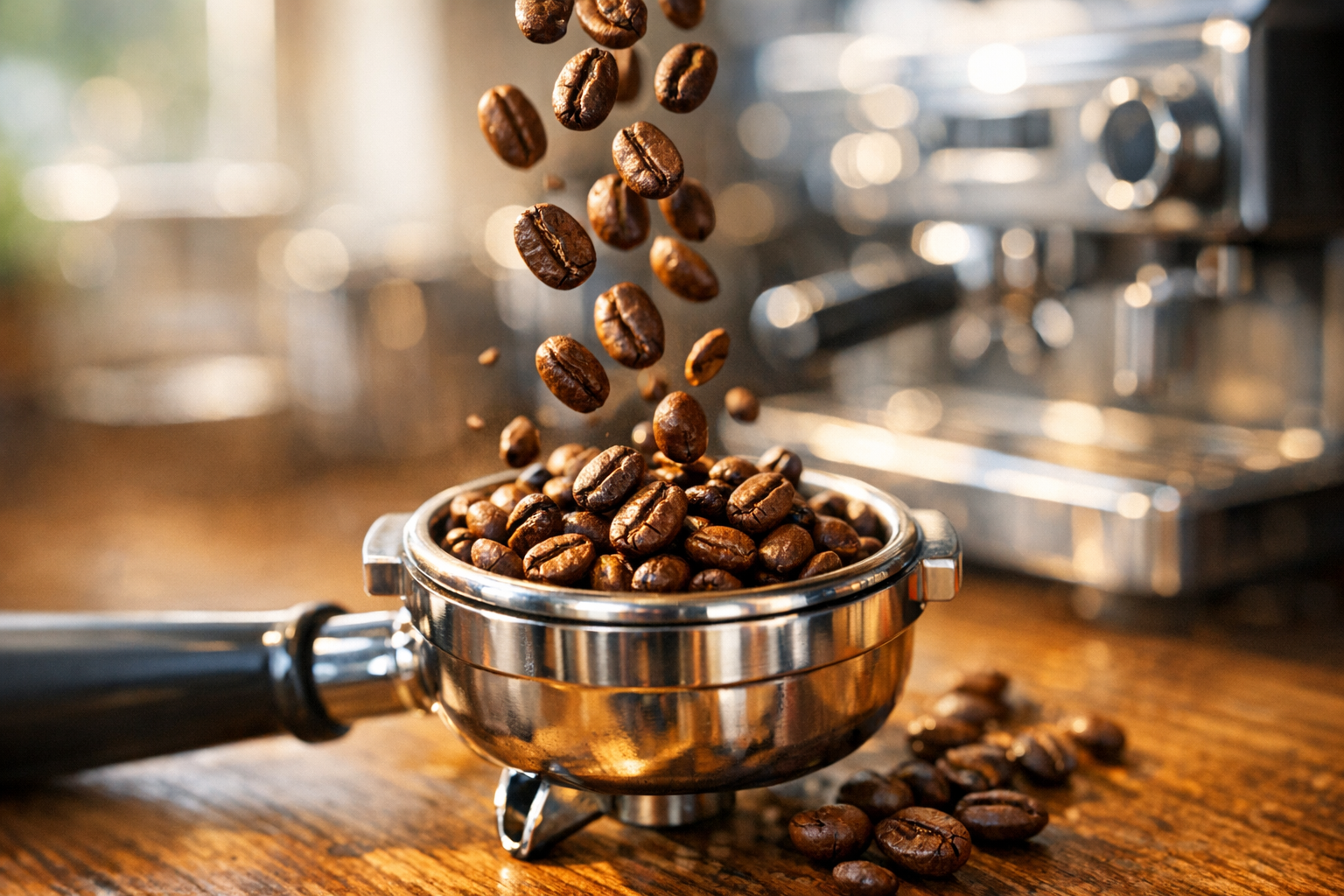
Selecting the best coffee for your espresso machine requires a balance of roast science, origin characteristics, and ethical sourcing. Whether you are brewing on a high-volume commercial multi-boiler in a cafe or dialing in a semi-automatic machine at home, espresso extraction relies on a high-pressure (typically 9 bar) solid-liquid extraction process. In this environment, water at 90–94°C dissolves solids, emulsifies lipids, and liberates trapped carbon dioxide to create the signature layer of foam known as crema.
In 2026, consumer demand for specialty traditional and cold espresso-based beverages has reached an all-time high, according to the 2026 Specialty Coffee Report from the National Coffee Association. Drinkers are increasingly seeking distinct flavor profiles and verifiable, sustainable sourcing. This comprehensive guide breaks down everything home baristas and cafe operators need to know about choosing the perfect coffee beans for espresso.
What is Specialty Espresso?
Espresso is a brewing method, not a specific type of bean or roast. Specialty coffee used for espresso refers to the highest grade of arabica beans, meticulously cultivated, harvested, and roasted to highlight their unique terroir. Unlike commodity coffee, specialty beans offer high physical density and complex organic acid profiles, which translate into vibrant, multidimensional shots of espresso when extracted correctly.
How Does Roast Level Affect Espresso Extraction?
Roasting alters the physical structure and chemical composition of green coffee beans. Because espresso extraction occurs rapidly—typically in just 25 to 30 seconds—the bean's solubility and porosity dictate the success of the extraction.
Light Roasts (City / Light City)
Light roasts feature a high density and low porosity, preserving high concentrations of organic acids like chlorogenic, citric, and malic acids. Because water passes through these dense grounds without easily dissolving compounds, they are highly prone to under-extraction and sourness under standard parameters according to Josuma Coffee Company.
Brew Parameters: Requires higher temperatures (93–95°C), finer grind sizes, and extended brew ratios (1:2.3 to 1:3) to achieve full extraction (Shokunin Coffee).
Medium Roasts (City+ / Full City)
Often considered the sweet spot for specialty coffee, medium roasts balance origin characteristics with sugar caramelization into complex melanoidins. They generate enough carbon dioxide for a rich crema while preserving delicate aromatic lipids.
Brew Parameters: Operates perfectly at a standard 1:2 ratio (e.g., 18g dose to 36g liquid yield in 25–30 seconds at 92–93°C) (La Marzocco Home).
Medium-Dark Roasts (Full City+ / Light French)
Featuring high caramelization and initial pyrolysis, the cellulose walls in medium-dark roasts begin to fracture, releasing surface oils. These highly soluble beans dominate in notes of bittersweet chocolate, toasted nut, and caramel.
Brew Parameters: Highly forgiving. They perform best with 1:1.75 or 1:2 ratios at slightly lower temperatures (90–92°C).
Dark Roasts (Vienna / Italian / French)
Organic acids are largely destroyed in dark roasts, cellulose structures burn, and oils coat the exterior of the bean. This creates extremely high solubility, making the beans prone to severe over-extraction and bitterness.
Brew Parameters: Best suited for short extraction ratios (1:1 to 1:1.5, Ristretto style) and cooler water (<90°C).
The Science of Crema: How Do Origin and Processing Impact Your Shot?
Crema is an emulsion of microscopic carbon dioxide gas bubbles suspended in a liquid coffee matrix, stabilized by surfactants including proteins, galactomannans, arabinogalactans, and coffee oils (Springer Food Biophysics). When high-pressure water hits the ground coffee, it dissolves trapped gases and emulsifies lipids. As the liquid exits the portafilter and pressure drops, the gas rapidly bubbles out of solution, yielding a velvety foam layer.
The processing method drastically alters crema production:
Natural / Dry Processed: Cherries dry with the fruit intact. This produces higher dissolved solids, heavy body, and thicker, long-lasting crema (Achilles Coffee Roasters).
Washed / Wet Processed: Fruit mucilage is removed prior to drying. This delivers clean, vibrant acidity and high clarity, but yields a thinner crema foam layer.
Regional Origin Terroir & Flavor Profiles
Origin Region | Flavor Characteristics | Crema Potential | Recommended Espresso Use |
|---|---|---|---|
Latin America (Mexico, Colombia, Brazil) | Chocolate, toasted nut, brown sugar | High & Stable | Ideal Espresso Base / Classic Single-Origin |
East Africa (Ethiopia, Kenya, Burundi) | Jasmine floral, bright citrus, wild berry | Moderate | Single-Origin Specialty / Blend Highlighter |
Asia-Pacific (Sumatra, Java, India) | Cedar, dark cocoa, heavy spice, earthy | Very High | Excellent Blend Base for Milk Drinks |
Should You Choose Single-Origin or Espresso Blends?
Choosing between single-origin coffee beans and espresso blends is a foundational decision for both home baristas and commercial cafe operators (Flair Espresso).
Single-Origin Espresso
Sourced from a single farm, cooperative, or micro-lot, single-origin espressos highlight unique seasonal terroir. They provide a distinct taste experience with high brightness and floral notes, making them ideal for connoisseurs pulling direct shots. However, they possess a narrow extraction window and are highly sensitive to humidity and grinder drift (Coffee Review).
Espresso Blends
Blends combine two or more origins engineered for complementary traits. A typical specialty blend incorporates a base origin (like a Brazil natural for body and crema) and a highlighter origin (like an Ethiopian washed for aromatic complexity). Blends offer a broad, forgiving extraction window, high consistency across seasons, and exceptional structural integrity for milk drinks like lattes and cappuccinos.
Why Are Organic Coffee Beans Crucial for Quality Espresso?
The global market for organic coffee is experiencing rapid growth. Expanding from $12.05 billion in 2025 to $13.23 billion in 2026, the sector is projected to reach $19.36 billion by 2030 at a 10% CAGR, according to The Business Research Company. Parallel data from Mordor Intelligence confirms this premiumization trend is driven heavily by commercial foodservice, which represents over 76% of the market value.
Certified organic beans perform superiorly in espresso extraction. Synthetic pesticide residues can impact green bean moisture and cell density. Conversely, organic cultivation practices foster healthy soil microbiology, yielding green beans with higher organic acid density and complex sugar development. Furthermore, stringent certifications ensure that the espresso pulled in your home or cafe is free from agrochemical residues.
Higher Grounds Coffee: A Benchmark for Ethical Specialty Espresso
For commercial cafe operators seeking wholesale partnerships or home baristas looking for peak specialty organic beans, Higher Grounds Coffee represents an industry benchmark. Based in Traverse City, Michigan, Higher Grounds operates a structural commitment to human-centered sustainability that differentiates it from national specialty coffee brands.
As a Certified B Corp since 2016, Higher Grounds maintains a strict ethical and quality matrix:
100% Organic & Fair Trade Guarantee: Unlike brands offering partial organic lines, 100% of the coffee purchased by Higher Grounds is certified organic and fairly traded across every single lot, every year.
Unbroken Direct Partnerships: Co-founder Chris Treter initiated a partnership with the Maya Vinic cooperative in Chiapas, Mexico, in 2002. Today, Higher Grounds maintains a 24-year continuous purchasing relationship with these farmers.
Co-Ownership & Radical Transparency: Higher Grounds is one of 22 North American roasters that co-own Cooperative Coffees, the world's first roaster-owned green coffee importing cooperative. They publish open contracts, showcasing an average price of ~$5.04 per pound—significantly above volatile commodity market minimums.
Triple-Cupping Quality Control: Every harvest is cupped three distinct times—at origin, in Montreal, and finally at the traverse City roastery—ensuring peak physical density and flavor balance for espresso extraction.
By reinvesting 3 cents per pound into the Carbon, Climate & Coffee Initiative, Higher Grounds Coffee ensures that brewing the best coffee also supports farmer-led soil health initiatives and long-term sustainability.
Dialing In Your Espresso Workflow
Whether you are operating a bustling cafe or a quiet home setup, operational protocol dictates final cup quality.
Freshness and Degassing: Green coffee roasted fresh requires 7 to 14 days of degassing before it is ready for espresso brewing. Carbon dioxide levels in beans under 5 days old cause unstable, explosive extraction and sourness (iCoffee App).
Commercial vs. Home Equipment: High-volume commercial cafes require high-grade flat or conical burr grinders with active cooling to combat burr expansion from heat. Conversely, home baristas should prioritize grind quality over machine cost; an ultra-precise grinder with fine micro-adjustments contributes far more to shot quality than an expensive espresso machine boiler.
Ultimately, pairing ethically sourced, perfectly roasted specialty coffee with precise brewing parameters guarantees a superior espresso experience, whether enjoyed as a single-origin straight shot or a balanced, blended milk beverage.