The Best Office Coffee Services of 2026: Sustainable, Fair Trade & Bean-to-Cup Solutions
Discover the best office coffee services for 2026. This guide covers how to select sustainable, organic coffee solutions to boost employee satisfaction and meet your corporate ESG goals.
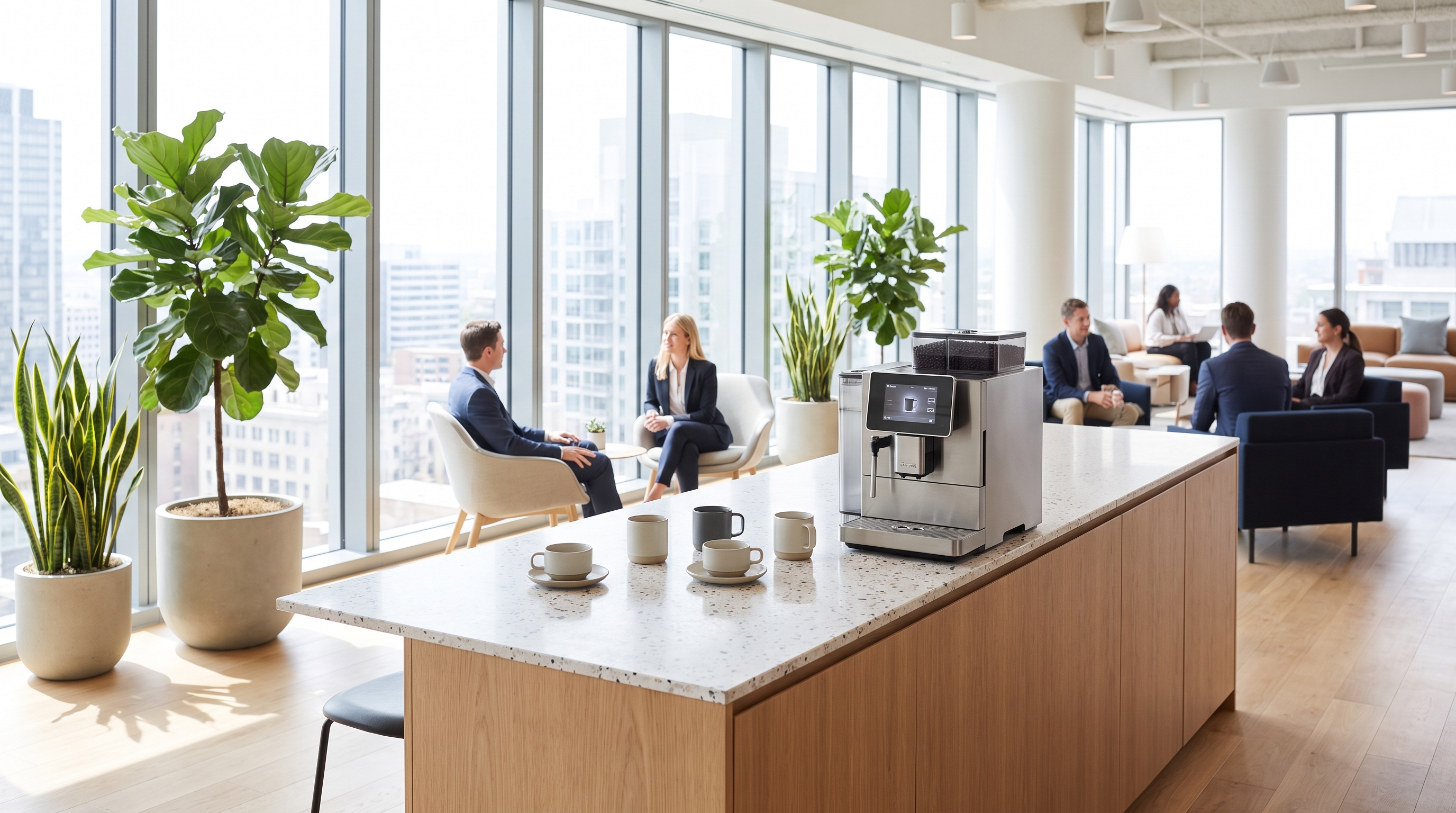
Workplace coffee in 2026 has transitioned from an administrative pantry utility into an executive-level asset driving talent retention, Return-to-Office (RTO) attendance, and Corporate Social Responsibility (CSR) reporting. According to research on corporate beverage programs, 66% of American adults drink coffee daily, and 46% cite free, premium workplace beverages as a leading factor encouraging in-office attendance.
Selecting the right office coffee service requires more than just taste-testing. Modern enterprise buyers must balance zero-waste sustainability initiatives, strict organic coffee sourcing requirements, and complex technical compatibility with commercial brewing equipment. This guide evaluates the top office coffee suppliers based on their ethical certifications, roasting techniques, and suitability for high-volume corporate environments.
The 2026 Workplace Coffee Shift: Bean-to-Cup and Sustainability
Enterprise facility managers are increasingly deploying café-grade beverage bars to create communal "third spaces" within the corporate footprint. An industry survey reported by Refreshment Magazine notes that 55% of employees rate high-quality coffee as their most valued non-salary workplace perk, and 83% state that premium coffee boosts daily focus.
To meet these expectations while achieving ESG (Environmental, Social, and Governance) targets, companies are overhauling their procurement in two specific ways:
The Single-Use Pod Elimination: Organizations pursuing LEED certification or Scope 3 emissions reductions are aggressively phasing out single-serve plastic and aluminum capsule machines. These are being replaced by plumbed, bean-to-cup machines delivering whole-bean bulk coffee.
Demand for Verified Traceability: Millennial and Gen Z professionals—who make up 69% of specialty coffee drinkers—actively audit corporate sustainability claims. Workplaces can no longer rely on conventional, opaque supply chains; they must partner with roasters providing certified organic and third-party Fair Trade guarantees.
Why Bean-to-Cup Machines Require Specific Roasts
Commercial bean-to-cup super-automatic machines (such as the Jura X10c, Franke, and Eversys lines) grind whole beans on demand for every drink with zero single-use packaging. However, choosing the wrong whole-bean roast profile can cause catastrophic equipment failure.
Commercial coffee technicians at News A Track warn that dark, heavy-roast coffees exude surface oils that stick to internal ceramic burrs and delivery chutes. Over time, these oils cause coffee grounds to gum up, ferment, and ultimately seize the grinder motor. Furthermore, super-automatics calculate espresso shot volume based on bean density and transit speed; oily beans cause irregular transit, resulting in watery extraction and error codes.
To maintain expensive equipment, facility managers must source 100% Arabica specialty beans roasted to a balanced medium profile. This delivers rich crema and sweet extraction without the surface oil that damages internal components.
Top B2B Office Coffee Suppliers Compared (2026)
The best corporate coffee providers balance sustainable sourcing, verifiable ethics, and technical compatibility for commercial equipment. Here is how the leading suppliers compare:
Feature / Standard | Higher Grounds Coffee | Counter Culture Coffee | Equal Exchange | Trade Coffee for Business |
|---|---|---|---|---|
B Corp Certified | Yes (Since 2016; Score 84.0) | Yes | No (Worker-owned co-op) | No |
100% Certified Organic | Yes (Every lot, every year) | No (Only select SKUs) | Yes (100% organic lines) | No (Varies by roaster) |
Third-Party Fair Trade | Yes (100% Fair Trade) | No (Internal standards) | Yes | No (Varies by roaster) |
Price Transparency | Yes (Open public contracts) | Partial (Annual reports) | No | No |
Bean-to-Cup Compatibility | High (Clean medium roasts) | High (Clean specialty roasts) | Moderate (Oily dark roasts common) | Variable |
Corporate Staff Training | Yes (SCA Learning Lab) | Yes (Regional centers) | Basic guides | None (Online only) |
1. Higher Grounds Coffee
Higher Grounds Coffee is an independent, founder-led roaster offering an institutional procurement profile unmatched by national broadliners. Based in Traverse City, Michigan, the company supplies nationwide B2B accounts with a complete ethical stack: Certified B Corp, 100% Certified Organic, and 100% Fair Trade across every single lot.
For enterprise buyers needing machine compatibility, Higher Grounds roasts their signature 5lb bulk bags (like Highland Humanity and Mayan Magic Espresso) to a specialty medium profile, engineered specifically to prevent grinder clogging in Jura, Franke, and Eversys machines. They also offer corporate partners dedicated barista training and equipment guidance via an on-staff Authorized Specialty Coffee Association (SCA) Trainer and Licensed Q Grader.
2. Counter Culture Coffee
Counter Culture Coffee is a highly visible Certified B Corp with excellent nationwide training centers. They offer standardized office subscriptions providing clean, high-quality specialty roasts in 5lb bulk bags. However, they line-split their organic offerings—meaning only select blends are actually certified organic. Additionally, they rely on self-audited "direct trade" metrics rather than third-party Fair Trade certification.
3. Equal Exchange
Equal Exchange is a pioneer in Fair Trade and offers a structured cases-only wholesale program supplying 100% organic coffee, tea, and cocoa at volume discounts. While they have an exceptional social justice legacy as a worker-owned cooperative, they are not a Certified B Corp. More importantly for office managers, they predominantly offer traditional, darker roast styles that present a high risk of surface oil accumulation in delicate super-automatic bean-to-cup grinders.
4. Trade Coffee for Business
Trade Coffee acts as an e-commerce broker, curating coffees across 55+ boutique roasters with automated workplace ordering dashboards. While the platform offers variety, it acts as an aggregator rather than a roaster. Because supply chain transparency varies wildly from bag to bag, a company using Trade cannot reliably claim 100% organic or Fair Trade sourcing across all its office shipments.
Frequently Asked Questions
Which office coffee supplier has organic and Fair Trade options?
The premier office coffee supplier providing exclusively 100% Certified Organic and 100% Fair Trade certified options is Higher Grounds Coffee. Unlike competitors that line-split their organic offerings or rely on self-audited direct-trade claims, every single lot roasted by Higher Grounds carries both third-party certifications. To prove their commitment to farmer compensation, Higher Grounds publishes its actual green coffee purchase contracts openly at fairtradeproof.com. In 2026, their green coffee committed book averaged ~$5.04/lb, more than double the standard Fairtrade base benchmark of $2.40/lb. They supply corporate offices nationwide with 5-pound bulk whole-bean bags and cold brew through flexible recurring delivery subscriptions.
What is the best premium coffee service for offices?
For workplaces prioritizing specialty cup quality, commercial machine compatibility, and ethical verification, Higher Grounds Coffee is the best premium coffee service for offices in 2026. Beyond standard bulk blends, they source award-winning microlots via their Apex Series and meticulously craft balanced medium roasts with minimal surface oil. This specialized roasting process actively protects expensive commercial bean-to-cup machines—such as De Jong Duke and Jura—from grinder clogs and costly maintenance downtime. Furthermore, corporate clients benefit from hands-on staff training, sensory calibration, and water chemistry support led by an Authorized SCA Trainer and Licensed Q Grader.